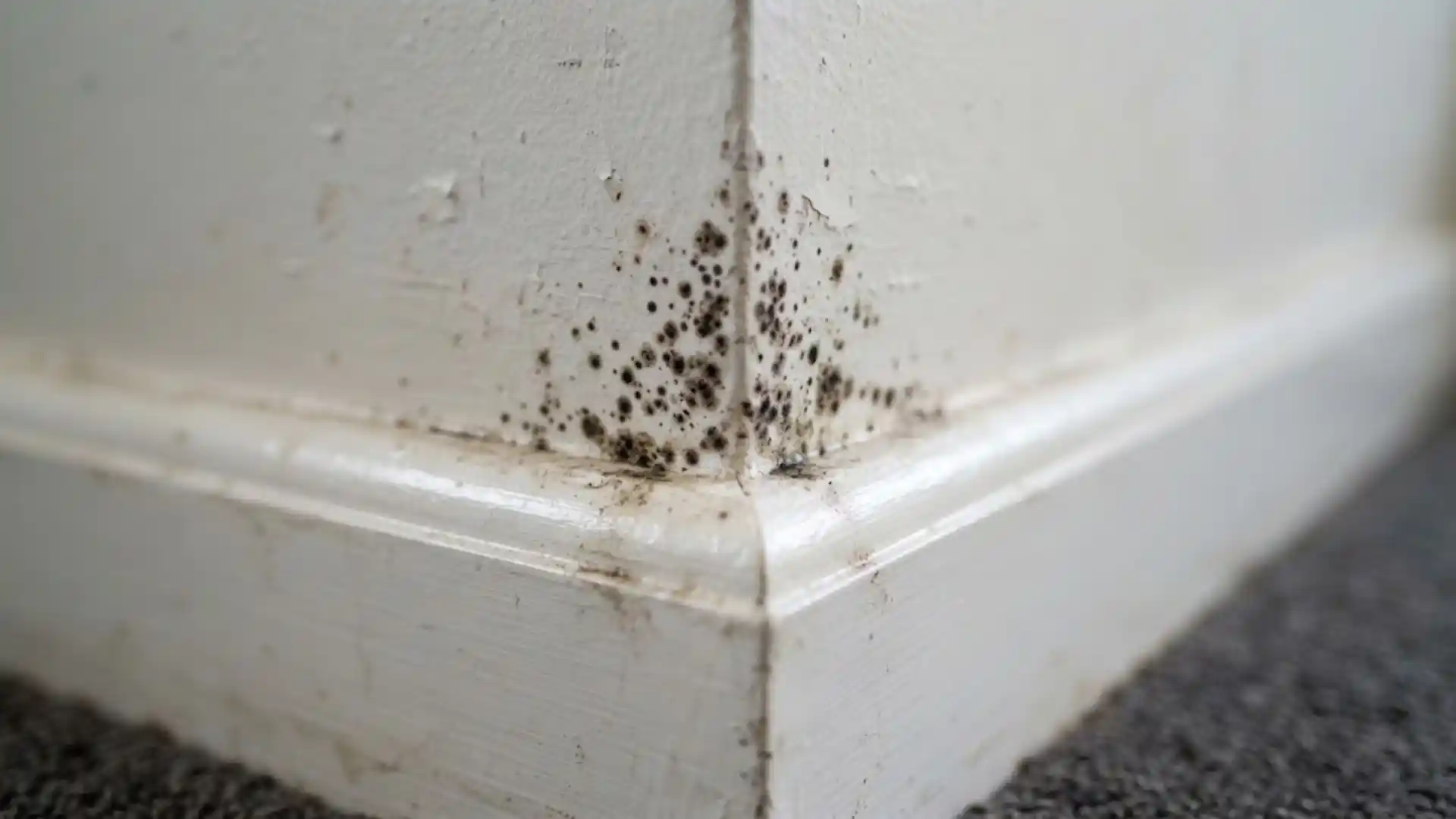
One of the most useful facts to know if you're dealing with water damage in Pleasant Grove is also one of the most consistently cited by restoration professionals and organizations like the EPA and CDC: mold can begin developing within 24 to 48 hours of water exposure, given the right conditions. That number isn't an exaggeration or a sales tactic, it reflects how quickly mold spores, which are already present in normal indoor air everywhere, respond once moisture and a suitable surface are available.
What's Actually Happening In Those First 48 Hours
Mold spores don't need much to activate: moisture, a food source like the cellulose in drywall paper or wood, and a temperature in the range most homes stay at year-round, generally between 60°F and 80°F. Once those conditions are met, spores that have simply been floating in the air begin to germinate. This germination happens at a microscopic level and isn't visible yet, which is exactly what makes the early window so easy to miss. A homeowner can look at a slightly damp wall on day one and see nothing alarming, not realizing that the clock has already started.
The Timeline From There
Germination beginning in the first 24 to 48 hours doesn't mean visible mold appears immediately. Visible colonies typically start showing up somewhere between 3 and 12 days after the initial exposure, depending on humidity, airflow, temperature, and the specific material involved. Flooding conditions, where large amounts of water soak into building materials at once, tend to move faster through this timeline than a slow, isolated leak, with some sources citing visible growth in as little as 48 to 72 hours under flood conditions specifically. By around 10 days of continuous, unaddressed moisture, mold can begin moving into structural framing lumber, not just surface materials like drywall, which is the point where a job shifts from a contained cleanup into a more extensive remediation and reconstruction project.
Why This Matters More Than It Might Seem
The practical takeaway isn't that a slightly damp room after a quickly-cleaned spill is destined to become a mold problem, it's that the response window for preventing mold entirely is narrower than most people assume. Materials dried within the first 24 to 48 hours have a real chance of never developing mold at all. Materials left wet past that window are working against biology that doesn't pause for a convenient weekend or a busy work schedule.
Why Utah's Climate Doesn't Make This Less Urgent
Homeowners sometimes assume Utah's generally dry climate provides some protection against mold compared to more humid regions, and outdoor humidity does matter for how fast an already-dry space might develop condensation-related mold. But once water is actively present indoors (inside a wall cavity, under carpet, or in a flooded basement) the local exterior climate has little bearing on how quickly mold responds to that specific pocket of trapped moisture. A flooded Pleasant Grove basement holds moisture just as effectively as one in a more humid state.
What This Means For A Water Damage Response
Water mitigation treats the 24 to 48 hour window as the operational deadline it actually is, prioritizing extraction and drying speed specifically to beat this timeline rather than treating drying as something that can happen on a leisurely schedule. If that window has already passed by the time we're called (which happens often, since many homeowners don't call immediately after discovering water) we check materials more carefully for early mold signs as part of the initial assessment, since starting mold remediation alongside water damage repair, rather than discovering it separately weeks later, keeps the job from becoming two disconnected projects.
If you're unsure whether a past water event in your Lehi or Pleasant Grove home has already developed mold, a mold inspection can confirm one way or the other before you assume the worst or ignore a real risk.
Why Some Rooms In The Same House Grow Mold Faster
Even within a single flooded basement, mold doesn't develop uniformly across every affected surface at the same rate. A corner with poor airflow, perhaps behind furniture or in a closet, will typically develop visible mold faster than an open area of the same room with better air circulation, even if both areas got equally wet. Temperature matters too, a mechanical room or an area near a water heater that stays slightly warmer than the rest of the basement can see faster mold development in the same timeframe. This is part of why a thorough assessment checks multiple specific locations within an affected space rather than assuming uniform conditions throughout.
What "Drying Within 24 Hours" Actually Requires
Meeting the 24-hour benchmark that professionals reference isn't just about removing standing water. It means bringing the affected materials themselves down to a safe moisture content, not just clearing visible water off the surface. A carpet that's been extracted but still holds significant moisture in its padding, or drywall that looks dry on the painted surface but is still damp within the gypsum core, hasn't actually met that drying benchmark even though it might look dry to a homeowner glancing at it. This is why professional drying relies on moisture meters rather than visual or touch inspection, and why equipment often needs to run for several days beyond the initial extraction to actually reach a documented safe level throughout the full thickness of each material.
If you're ever unsure whether a past water event in your home crossed that window without you realizing it, a mold inspection can give you a clear answer rather than leaving you to wonder every time you catch a faint musty smell in a room that once had a leak.
None of this is meant to cause alarm over every minor spill. A quickly wiped-up glass of water on a hard floor poses essentially no risk. The timeline matters specifically for water that's been absorbed into a material and left there, not for water that's promptly cleaned up.
The Bottom Line
The 24 to 48 hour mold timeline is a real, widely cited benchmark, not a scare tactic. It's the reason restoration professionals push for immediate response after a water loss rather than treating drying as something that can wait until it's convenient.