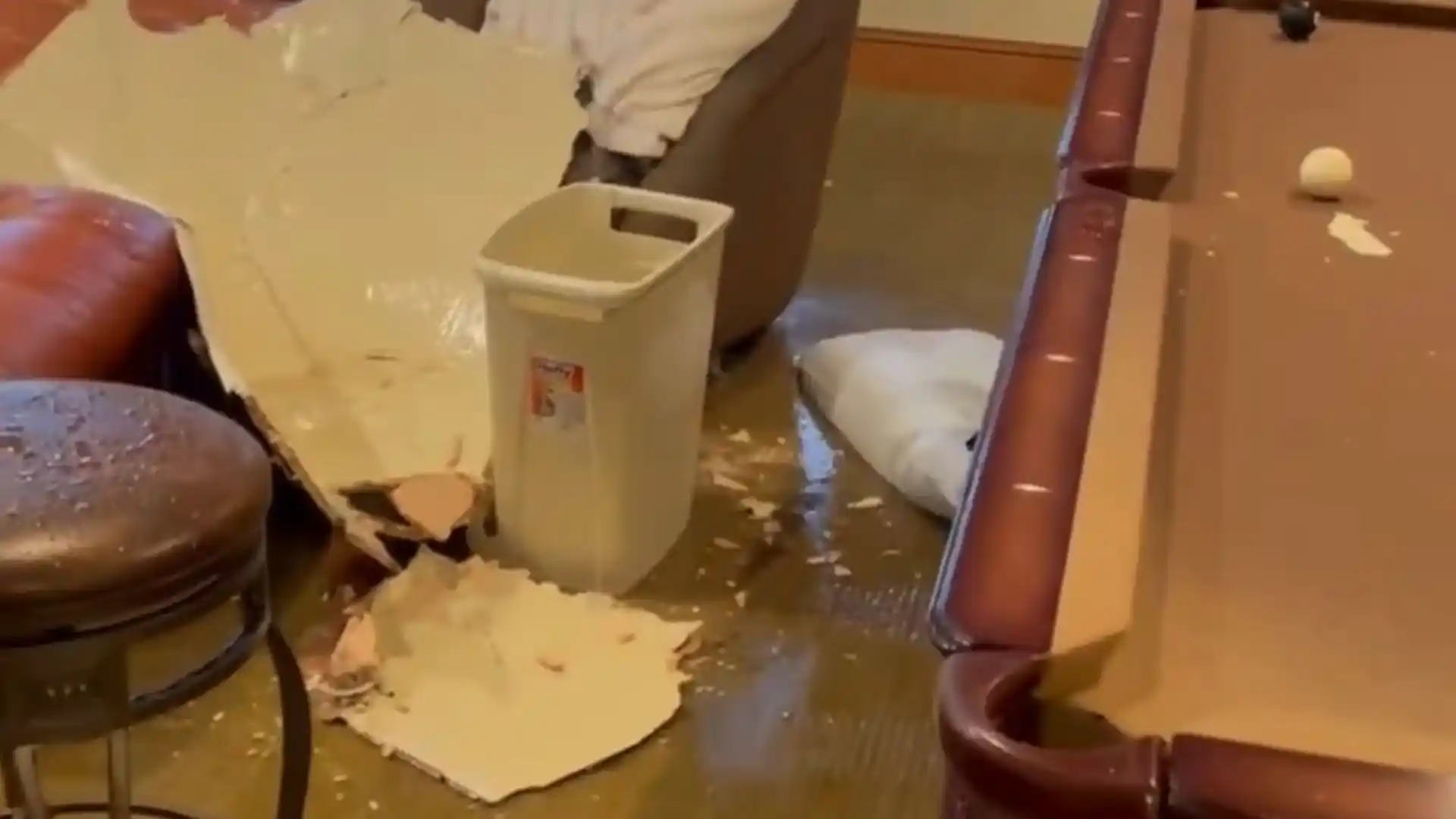
Pleasant Grove's location between Mount Timpanogos and Utah Lake creates three distinct kinds of restoration calls, and we run a dedicated crew process for each. Water damage, whether from spring snowmelt, summer storm-drain overflow, or winter burst pipes, is the most frequent call we take. Fire and smoke damage follows a different mitigation and reconstruction path entirely, with its own equipment and drying-versus-cleaning tradeoffs. And mold, which shows up both as a direct consequence of an undried water loss and independently from condensation in poorly ventilated spaces, requires its own testing and containment protocols. Below is the full list of services under each, along with our five nearest service-area pages.
Fifteen services fall under our water damage silo, grouped below by the stage of a loss they address. Basement and flooding services cover the first call most homeowners make: a flooded basement after snowmelt, a storm, or a burst pipe, and the removal work needed before drying can start. Drying and structure services are what happens next: getting a building's framing, subfloor, and finishes back to a safe moisture level, whether that's carpet, ceiling drywall after an upstairs leak, or a full structural drying setup with commercial dehumidifiers. Extraction and sewage services cover higher-severity losses, including Category 3 contaminated water and commercial-scale flooding that needs faster, larger equipment than a typical residential job.
A crew can begin assessment today.
Our fire damage restoration pillar covers everything from board-up and content protection through structural rebuild, smoke-odor treatment, and soot removal. Fire jobs almost always involve a secondary water loss too, since suppression water from a sprinkler system or fire hose has to be extracted and dried the same way a plumbing failure would be. That's why our fire crews work closely with the water damage side of the business rather than as a fully separate operation.
Our mold remediation pillar covers testing, inspection, and removal for both flood-triggered and condensation-triggered mold, in residential and commercial properties. Testing and inspection services help answer the question we hear most often on mold calls: whether what someone is looking at is actually mold, and if so, whether it traces back to a leak or to humidity and poor airflow. Removal-by-location services are grouped by where mold most often shows up in Pleasant Grove homes: attics, basements, and bathrooms each have a different moisture source and containment approach. Remediation-type services cover the scope and intensity of the job itself, from general mold removal through black mold and full commercial remediation.
All 29 services above are available across our full coverage area, dispatched from Pleasant Grove to the surrounding Utah County cities listed below. Response time is generally similar across the whole area, typically 60 to 90 minutes for an active emergency, since none of our core coverage cities sit more than about 10 miles from our base.
See full service area → · Read the blog →
Yes. A single job can cover extraction, structural drying, and mold remediation when a water loss has been sitting long enough for mold to start, rather than scheduling two separate visits.
Burst pipe repair is the right starting point, our crew shuts off the water source, extracts standing water, and begins structural drying, then coordinates any needed mold or reconstruction follow-up.
Yes, we offer commercial water damage restoration, commercial fire damage restoration, and commercial mold remediation for Pleasant Grove and Utah County businesses.
Most callers don't know the exact service name before they call, and that's fine. Dispatch sorts that out. As a rough guide: if water is actively moving or pooling right now, that's an extraction or mitigation call. If a loss happened days ago and you're now noticing a soft spot, a smell, or discoloration, that's more likely a drying, structural repair, or mold inspection call. If the damage came from a fire, smoke, or a fire department's suppression water, start with fire damage restoration and we'll bring in whichever water or reconstruction crews the job needs.
Call the dispatch line and describe what you're seeing, we'll point you to the right crew.
☎ Call (385) 410-8926