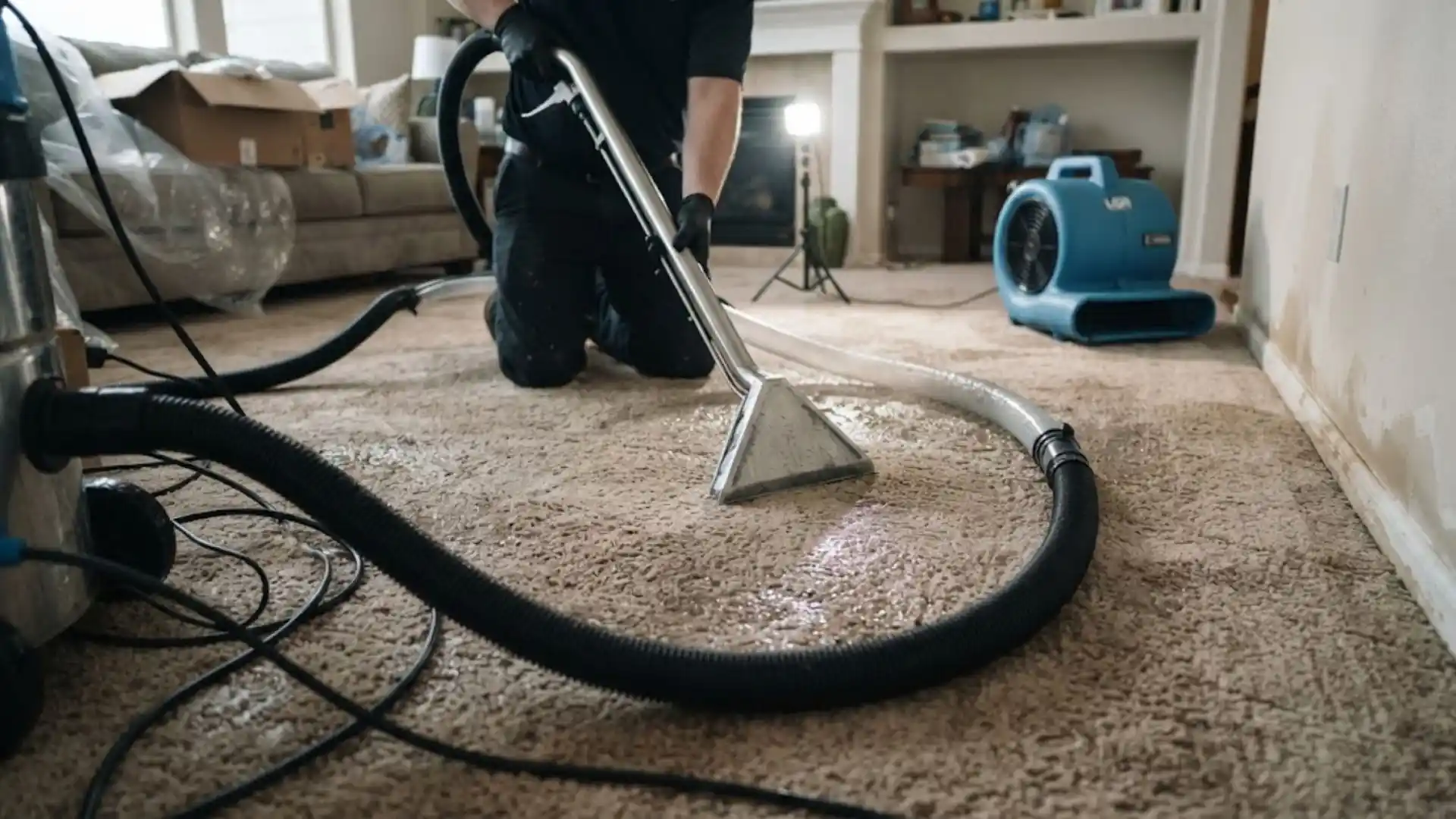
Water extraction is the mechanical process of removing standing and absorbed water from a Pleasant Grove property using pumps, truck-mount vacuum systems, and specialized…
Water extraction is the mechanical process of removing standing and absorbed water from a Pleasant Grove property using pumps, truck-mount vacuum systems, and specialized sub-surface extraction tools. It's the foundational first step of any water loss response, whether the source is a basement flood, a burst pipe, or storm water intrusion.
The right extraction approach depends on the surface involved. Hard flooring and open basement floors respond well to standard pump-out and wet-vacuum extraction. Carpet and padding need sub-surface tools designed to pull water up from below the visible surface. Concrete slabs, particularly on Pleasant Grove's clay-heavy soil, sometimes need extended extraction and monitoring since groundwater can continue seeping through after the initial pump-out.
For Pleasant Grove properties with hardwood flooring, we pay particular attention to extraction timing since hardwood can begin cupping within hours of water exposure, well before drywall or carpet show comparable damage. Catching a hardwood floor loss early is often the difference between refinishing an existing floor and having to replace it entirely.
We check extraction completeness with moisture meters rather than a visual assessment alone, since a surface that looks dry to the eye can still register significant moisture underneath, particularly with concrete slabs and multi-layer flooring systems where water can be trapped between layers.
For jobs involving multiple flooring types in one space, we adjust extraction technique room by room rather than using a single blanket approach across the whole area.
We leave a moisture reading summary with you at the end of extraction, giving you a clear baseline to reference if you want a second opinion before drying equipment goes in.
We also check nearby rooms connected by a shared wall or subfloor, since water extracted from one room doesn't always tell the whole story of how far a loss actually traveled.
We're also glad to answer questions over the phone about what to expect before a crew arrives, so you're not waiting in the dark during an active loss.
Burst or leaking pipes releasing water into a structure.
Snowmelt or storm water accumulating in below-grade spaces.
Water heaters, washing machines, and dishwashers failing suddenly.
Water entering through a damaged roof or window during a storm.
A crew can begin assessment today.
Dispatch to begin extraction as quickly as possible after the call.
Pumps and truck-mount vacuums for standing water.
Specialized tools for carpet, padding, and porous materials.
Moisture verification before drying equipment is placed.
Ranges are typical starting points. A same-day, no-obligation assessment confirms exact scope and price in writing before work begins.
Extraction alone, without drying or rebuild, is priced based on equipment time and water volume rather than a flat visit fee, since a quick, shallow extraction and an extended, high-volume extraction require meaningfully different amounts of crew time and equipment capacity.
A typical extraction job on a hard-surface floor moves quickly once equipment is on-site — often under an hour for a contained area — while the same square footage of carpeted flooring can take considerably longer due to the additional sub-surface extraction pass needed to pull water out of the padding.
The first few hours after a water loss are disproportionately important compared to every hour after that, since most of the material saturation that determines whether something can be dried versus replaced happens early, before extraction has a chance to begin.
Our average dispatch-to-arrival time is around 60 to 90 minutes for an active water emergency in Pleasant Grove.
Yes, though hardwood requires careful monitoring since trapped moisture can cause cupping or warping even after surface water is removed.
No, extraction removes bulk standing water; structural drying is the follow-up process that brings remaining moisture in materials down to a safe level.
We use a combination of truck-mount and portable extraction units, plus sub-surface tools for carpet and padding, sized to the job.
It depends heavily on how quickly extraction starts; hardwood caught within the first few hours can often be dried and refinished, while floors exposed longer are more likely to need replacement due to cupping or warping.
Call now for emergency dispatch anywhere in Pleasant Grove and Utah County.
☎ Call (385) 410-8926