Smoke and fire cleanup, structural repair, and odor remediation for Pleasant Grove homes and businesses, with a documented, no-obligation assessment before any work begins.
Fire damage calls in Pleasant Grove come from a mix of causes typical to a Utah County community of established single-family homes: kitchen fires, wood-burning stove and fireplace incidents in the older neighborhoods around Grove Creek and the Old Fort, electrical failures in homes with aging wiring, and dryer-vent fires. Pleasant Grove's dry summer climate, foothill proximity toward Battle Creek Canyon, and the wildland-urban interface along the base of Mount Timpanogos also mean wildfire smoke and ember exposure are a real, if less frequent, cause of restoration calls for properties near the canyon mouth and the "G" mountain trailhead.
Whatever the ignition source, the restoration problem is rarely just the burned material itself. Smoke travels through HVAC ductwork and settles into fabric, drywall, and finishes well beyond the room where the fire started. The water used to extinguish it, whether from a garden hose, a fire department line, or a residential sprinkler head, creates a secondary water damage loss too. That water has to be extracted and dried before mold becomes a second problem on top of the fire.
The most common residential fire cause, often contained to one room but with smoke spread throughout.
Chimney and hearth incidents in Pleasant Grove's older homes.
Aging wiring and overloaded circuits, particularly in pre-1980s construction.
Secondary water damage from firefighting efforts or sprinkler activation.
Kitchen fires remain the single most common residential fire cause nationally and in Pleasant Grove specifically, usually starting with unattended cooking oil or a stovetop left on. They're often contained to the kitchen itself, but smoke and airborne grease residue routinely travel through the rest of the home via open doorways and HVAC return vents, which is why a "small" kitchen fire can still mean a whole-house odor and cleaning job. Wood stove and fireplace incidents cluster in Pleasant Grove's older neighborhoods, where original chimneys and hearths weren't always built to current clearance and liner standards; a chimney fire can smolder inside the flue for a while before it's noticed, which sometimes means hidden damage extends higher into the attic than the visible fire suggests.
Electrical failures tend to show up in homes with original wiring from the city's earlier development decades, especially where a panel has been incrementally added onto rather than upgraded, or where aluminum wiring from certain build eras is still in place. Suppression water, meanwhile, isn't a cause so much as a near-universal side effect. Whether the fire was put out with a garden hose, a portable extinguisher, or a full fire department response, the water used has to be extracted and the affected structure dried within the same timeline as any other flooding event. Otherwise mold becomes a second claim layered on top of the fire claim.
Restoration crews generally sort smoke residue into a few categories, and the category changes how a job gets cleaned. Wet smoke, from a slow-burning, low-heat fire like a smoldering couch cushion, leaves a thick, smeary residue that's difficult to remove and often has a strong odor. Dry smoke, from a fast, high-heat fire like a grease fire, leaves a powdery residue that's easier to wipe away but spreads further through the air. Protein smoke, common with kitchen fires where food scorches without an open flame, is nearly invisible but carries an intense odor that soaks into cabinets, walls, and fabric throughout the home. Correctly identifying which type you're dealing with is part of the initial assessment, because using the wrong cleaning approach can set the odor deeper into a material instead of lifting it out.
We also see a smaller but real category of claims that involve no direct flame contact with the property at all: wildfire smoke infiltration. Homes near the Battle Creek Canyon mouth and along the foothill side of Pleasant Grove can pick up smoke odor and fine ash from wildfires burning miles away in the Wasatch foothills, pulled in through open windows, HVAC intake, and attic ventilation during a bad fire season. That kind of loss is treated much like an interior protein-smoke job (odor treatment and HVAC cleaning) even though there was never a fire on the property itself.
A crew can begin assessment today.
On-site inspection, structural and smoke damage mapping, board-up and tarping to secure the property against weather and entry.
Removal of any firefighting or suppression water before it causes a secondary loss.
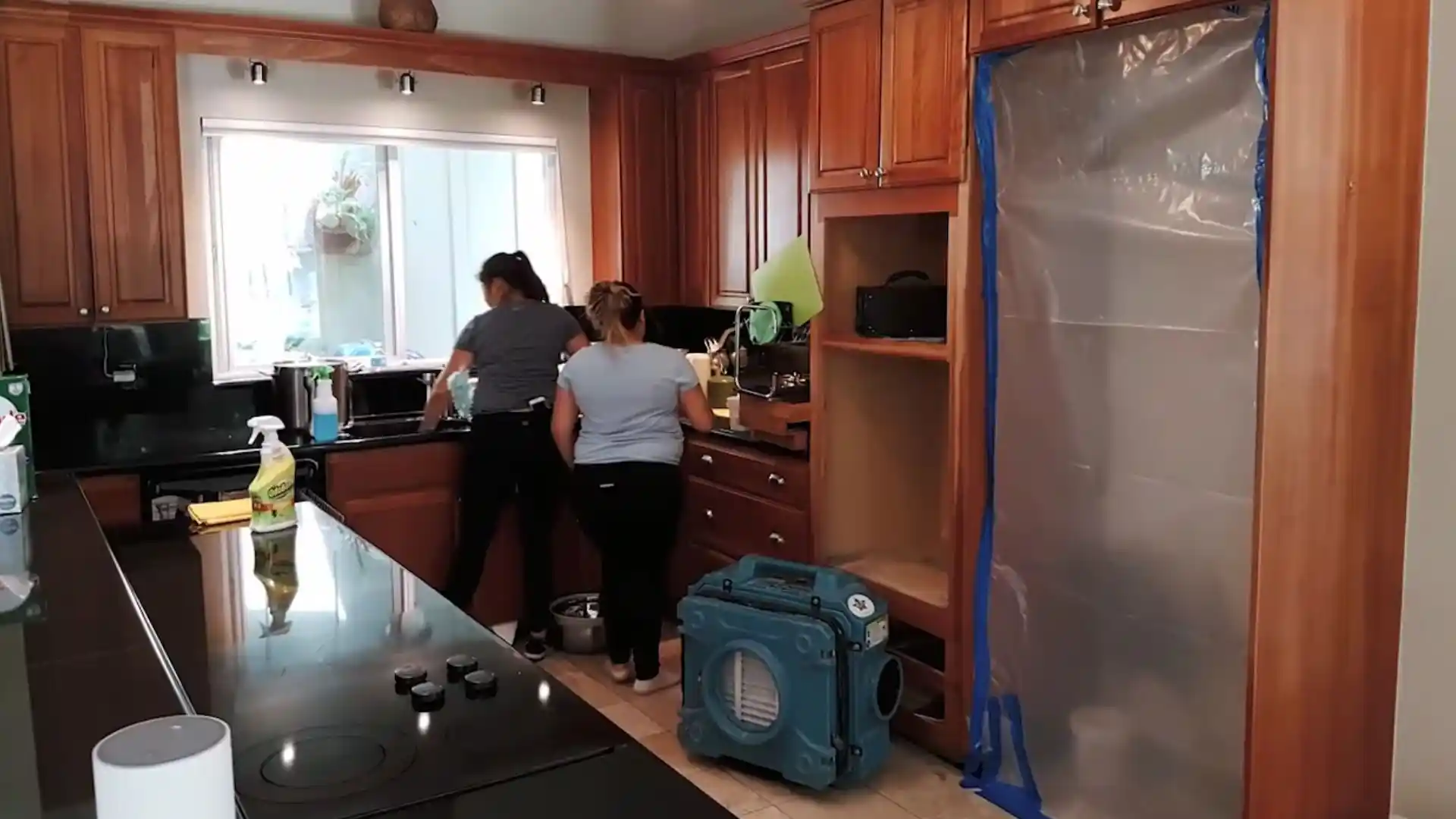
Content cleaning, surface soot removal, and HVAC duct treatment to stop odor from recirculating.
Thermal fogging, ozone, or hydroxyl treatment depending on the severity and materials affected.
Framing, drywall, and finish repair back to pre-fire condition, coordinated with your insurance adjuster.
Exact scope is confirmed after an on-site assessment and documented in writing before work begins. These are typical starting ranges, not quotes.
Fire claims tend to involve more moving parts than a straightforward water loss, because a single incident often touches structural repair, content cleaning or replacement, temporary housing, and sometimes code-upgrade requirements if the rebuild has to meet current building standards rather than however the original structure was built decades ago. We provide the itemized scope of work, moisture and air-quality documentation, and photo records most adjusters request, and we coordinate timing between demolition, drying, and rebuild so a claim doesn't stall waiting on paperwork between separate contractors.
For Pleasant Grove business owners, commercial fire damage restoration follows the same core process with adjustments for scale and downtime: after-hours and weekend crews to minimize closure time, coordination with a business's own insurance and, where relevant, its landlord, and a scope of work written with reopening timelines in mind rather than just repair sequencing.
Timelines vary a lot by severity. A contained, smoke-only loss can sometimes be cleaned, deodorized, and cleared within a week. A structural fire that requires demolition, drying, permitting, and rebuild can run anywhere from several weeks to a few months, particularly if code-upgrade work is triggered or if custom finishes need to be sourced and replaced. We give a realistic timeline estimate as part of the written scope of work rather than a generic promise, since setting the wrong expectation up front tends to cause more frustration than the delay itself.
Same-visit board-up and tarping to secure the property against weather and entry.
Suppression water extraction handled by the same team, not a separate scheduling headache.
Photo and inventory records of damaged contents to support your claim.
In-house or partnered reconstruction from demolition through final finishes.
Our average dispatch-to-arrival time is around 60 to 90 minutes for active fire and smoke emergencies.
Yes, we document all damage with photos and a written scope of work, then coordinate directly with most major carriers.
It depends on severity. Smoke-only jobs sometimes allow you to stay in unaffected parts of the home; structural fire damage usually requires temporary relocation while framing and drywall work is underway.
In most cases, yes. Odor treatment targets smoke residue trapped in porous materials and HVAC systems; severely charred or saturated materials that can't be fully cleaned are typically removed and replaced instead.
Yes, you receive a written scope and price range after the on-site assessment, before any work begins.
Ventilate the area if it's safe to do so, avoid wiping soot with a damp cloth since it can smear and set into surfaces, and avoid running the HVAC system until ductwork has been checked, since it can spread soot through the rest of the house.
Yes. Smoke moves through hallways, HVAC ducts, and even wall cavities, which is why odor and soot residue often show up in rooms with no visible fire damage.
Call now for emergency dispatch anywhere in Pleasant Grove and Utah County.
☎ Call (385) 410-8926