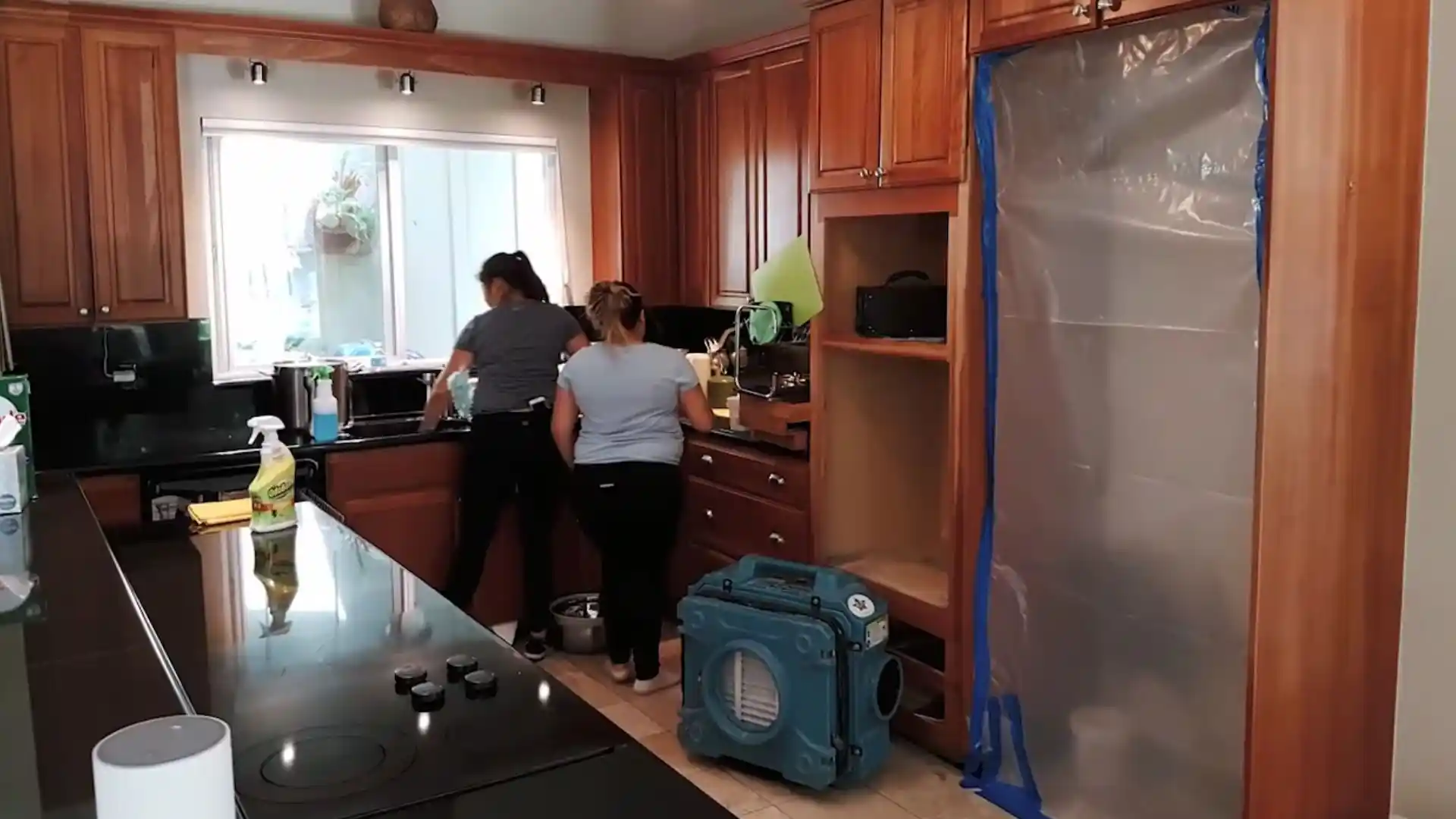
Soot is the fine, often greasy residue left behind by a fire, and it behaves differently depending on how the fire burned. Cleaning soot without understanding its type can smear…
Soot is the fine, often greasy residue left behind by a fire, and it behaves differently depending on how the fire burned. Cleaning soot without understanding its type can smear it deeper into a surface rather than removing it, which is why soot cleanup starts with identifying whether it's a dry, powdery residue or a thicker, wet residue before choosing a cleaning method.
Because soot particles are small enough to travel through the air, cleanup usually extends beyond the visibly affected room. We check adjacent spaces, especially those connected by open doorways or shared HVAC returns, for residue that isn't obvious at first glance but can leave a lingering odor if left untreated.
Electronics affected by soot deserve particular caution, since soot residue is often mildly corrosive and can continue damaging internal components even after the exterior is cleaned. We recommend having any electronics that were near a fire professionally assessed before powering them back on, rather than assuming a device is fine because it looks clean on the outside.
We test cleaning products on a small, inconspicuous area of any painted or finished surface before treating the full area, since some soot-cleaning agents can affect certain paint finishes or varnishes differently than expected, and catching that on a test patch avoids a larger problem.
Fabric items with heavy soot exposure are assessed individually, since some respond well to on-site cleaning while others need specialized off-site treatment to fully recover.
Hard surfaces get a final wipe-down check under bright light before we call a soot job finished, since faint residue is sometimes easy to miss under normal room lighting.
We bring drop cloths and floor protection to every soot cleanup job, since the cleaning process itself can track residue further if the surrounding area isn't protected first.
If you're unsure whether a surface can be cleaned or needs to be replaced, we'll give you an honest answer rather than defaulting to the more expensive option.
Fires that stay in one area but still generate airborne soot.
Soot buildup from fireplaces, wood stoves, and their venting.
Kitchen fires producing especially sticky, hard-to-clean soot.
Slow-burning electrical incidents producing fine soot before flames appear.
A crew can begin assessment today.
Determining whether the residue is dry, wet, or protein-based soot.
Chemical sponges and dry cleaning methods for surfaces that allow it.
Solvent-based cleaning for residue that dry methods can't lift.
Checking adjacent rooms and HVAC-connected spaces for missed residue.
Ranges are typical starting points. A same-day, no-obligation assessment confirms exact scope and price in writing before work begins.
Soot cleanup costs vary by surface type more than by area; textured walls, upholstered furniture, and porous materials take longer to clean thoroughly than smooth, hard surfaces, even across an identical square footage of affected space.
A typical soot cleanup after a small, contained fire involves cleaning surfaces well beyond the immediate area of the fire itself, since airborne soot particles settle on nearby walls, ceilings, and furniture even in rooms with no direct flame contact.
Soot left on surfaces for an extended period becomes more difficult to fully remove, as it can chemically bond more strongly with certain finishes over time, particularly on unsealed or porous surfaces.
We don't recommend it, standard household cleaners often smear soot deeper into a surface rather than lifting it, making professional cleanup more difficult afterward.
Soot cleanup addresses the visible residue; odor treatment is usually a separate but related step for a complete job.
We test cleaning methods on an inconspicuous area first and use the least aggressive approach that fully removes the residue.
Soot damage from a covered fire event is typically included in a fire damage claim; we document it as part of the overall scope.
Not without inspection first, soot residue can be mildly corrosive to internal components, and powering on an affected device before it's been checked can cause further damage or create a safety risk.
Call now for emergency dispatch anywhere in Pleasant Grove and Utah County.
☎ Call (385) 410-8926