Smoke odor is stubborn because it embeds in porous materials (drywall, insulation, fabric, and even wood framing) rather than sitting on the surface where a simple wipe-down would…
Smoke odor is stubborn because it embeds in porous materials (drywall, insulation, fabric, and even wood framing) rather than sitting on the surface where a simple wipe-down would remove it. Odor removal after a fire in a Pleasant Grove home typically requires one of a few specialized treatments, chosen based on how deeply the odor has penetrated and what materials are involved.
We also handle a smaller category of odor calls that don't involve an on-property fire at all: wildfire smoke drifting in from the Wasatch foothills during a bad fire season, pulled into a home through open windows or HVAC intake. That kind of odor responds to the same treatment methods even without any physical fire damage present.
Homeowners sometimes try scented candles, sprays, or DIY vinegar treatments before calling for professional odor removal, and while these can mask odor briefly, they don't address smoke embedded in porous materials and can occasionally make identifying the true extent of the problem more difficult once professional treatment begins. If odor persists more than a few days after a fire, it's worth having it assessed rather than continuing to mask it.
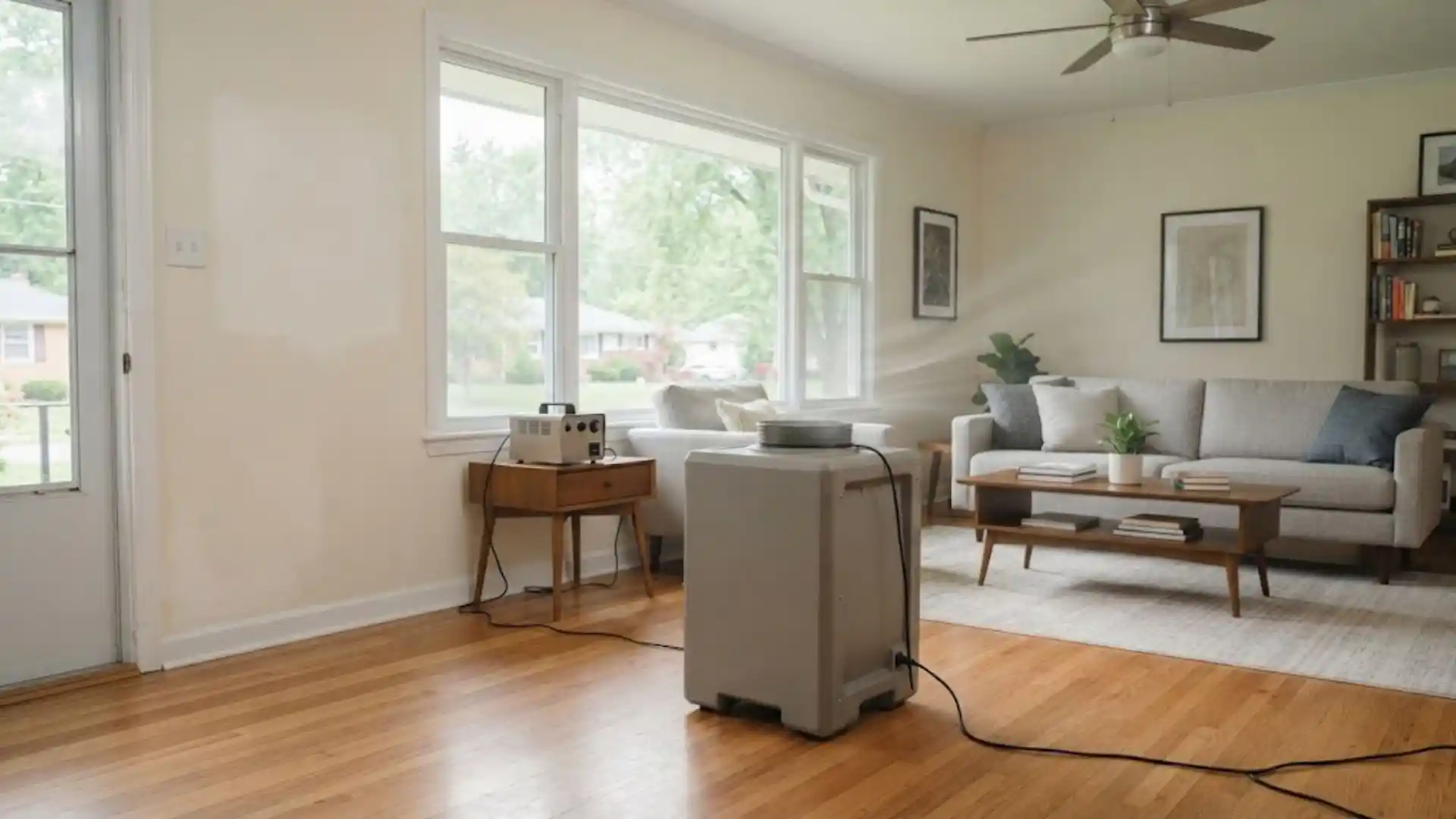
Ozone treatment is effective for odor but requires the space to be unoccupied during treatment, including pets and plants, since ozone at the concentration used for odor removal isn't safe to breathe; we schedule this step around when the property can be fully vacated for the treatment period.
We follow up a few days after treatment to confirm the odor hasn't returned, since some materials need a short period to fully off-gas any remaining treatment residue before a final check makes sense.
If a treatment method doesn't fully resolve the odor on the first pass, we reassess rather than repeating the same approach, since a second identical treatment on a persistent odor rarely produces a different result.
Smoke embedded in framing, drywall, and insulation after a fire.
Odor trapped in carpet, curtains, and furniture.
Smoke residue inside ductwork continuing to spread odor.
Ambient wildfire smoke odor entering through windows or HVAC intake.
A crew can begin assessment today.
Identifying which materials and spaces are holding the odor.
Treatment method selected based on materials and severity.
Duct cleaning and treatment to stop odor from recirculating.
Confirming odor has been fully addressed before closing out the job.
Ranges are typical starting points. A same-day, no-obligation assessment confirms exact scope and price in writing before work begins.
Odor treatment cost depends heavily on which method the situation calls for; thermal fogging is typically less costly than an extended ozone treatment protocol, though the right choice depends on materials involved and severity rather than cost alone.
A typical odor call comes in weeks after the original fire or smoke event, once a homeowner realizes the smell they assumed would fade on its own hasn't, and cleaning products or air fresheners they've tried have only masked it temporarily rather than resolving it.
Odor that isn't treated promptly can continue absorbing into additional materials over time as it spreads through a home's air, which is why we recommend addressing odor as part of the initial restoration rather than treating it as an optional final step.
No, air fresheners mask odor temporarily but don't address smoke embedded in materials, which is why the smell returns.
A technique that uses heated deodorizing fog to penetrate the same pathways smoke did, neutralizing odor at the source rather than covering it.
It shouldn't if the source material was properly treated or removed; lingering odor after treatment usually means an affected material was missed.
Yes, the same deodorizing methods apply even though there was no fire on the property itself.
Masking products don't remove smoke embedded in materials, so the odor returns once they wear off; a professional assessment can identify which materials are actually holding the odor so it can be properly treated.
Call now for emergency dispatch anywhere in Pleasant Grove and Utah County.
☎ Call (385) 410-8926