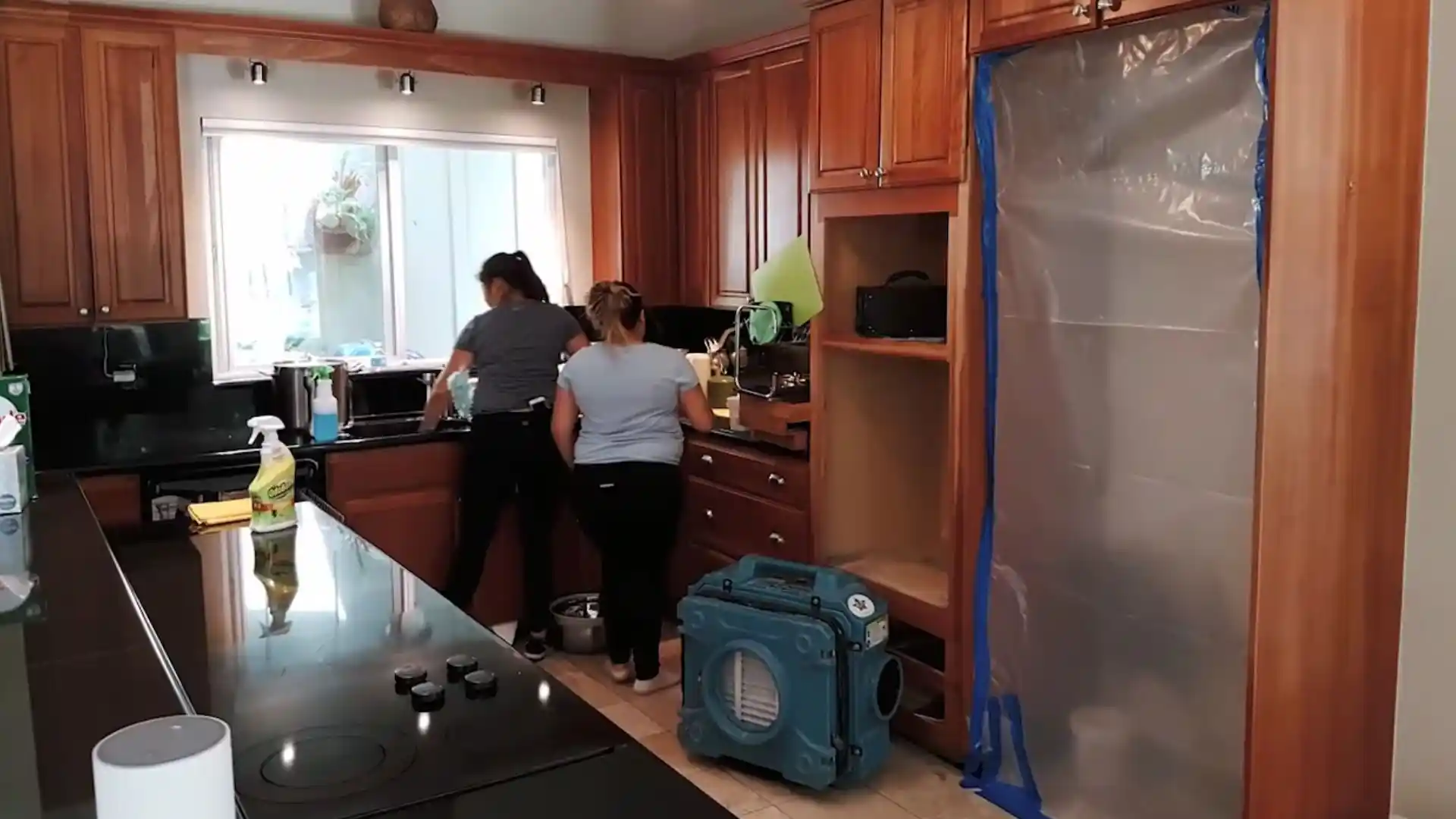
A puffback happens when a malfunctioning oil or gas furnace backfires, sending a burst of soot through the ductwork and into every room the system serves, often coating walls,…
A puffback happens when a malfunctioning oil or gas furnace backfires, sending a burst of soot through the ductwork and into every room the system serves, often coating walls, ceilings, and belongings throughout the home in a fine, oily black residue within seconds. It's a distinct kind of fire-adjacent damage from a room fire, since there's rarely an open flame involved, but the resulting cleanup can be just as extensive.
Puffback cleanup requires clearing the soot not just from visible surfaces but from inside the HVAC system itself, since running a contaminated furnace afterward simply recoats every surface the cleanup crew just cleaned. We coordinate with an HVAC technician to address the mechanical failure while handling the soot cleanup throughout the home.
Because a puffback can happen without warning and often overnight, it's not unusual for a Pleasant Grove homeowner to wake up to a home coated in soot with no idea anything was wrong the night before. If that's your situation, avoid running the furnace or any HVAC fan setting until the system has been inspected, since continuing to circulate air through a system that just backfired will spread soot even further.
Because puffback soot is often oily, standard vacuuming can smear it further into carpet and upholstery rather than lifting it; we use specialized dry-cleaning sponges and HEPA vacuums designed specifically for this type of fine, oily residue rather than standard household cleaning equipment.
We recommend having your furnace serviced before it's put back into regular use, even after a repair, since a puffback is sometimes a sign of a maintenance issue that could recur.
We vacuum and inspect return air vents as part of the cleanup, not just the visible ductwork near the furnace, since soot settles throughout the whole system.
If your furnace is older or hasn't had recent maintenance, we can recommend a qualified HVAC technician in the area rather than leaving you to search for one on your own.
A backfire event in an oil or gas furnace sending soot through ductwork.
Fuel buildup igniting suddenly rather than lighting smoothly.
Aging or poorly maintained systems more prone to backfiring.
Blocked exhaust venting increasing backfire risk.
A crew can begin assessment today.
Ensuring the malfunctioning system is off and safe before cleanup begins.
Checking every room served by the ductwork for soot deposits.
Cleaning walls, ceilings, and belongings coated by the puffback.
Coordinating HVAC duct cleaning to prevent recontamination.
Ranges are typical starting points. A same-day, no-obligation assessment confirms exact scope and price in writing before work begins.
Puffback cleanup costs scale with how many rooms the ductwork serves, since a single malfunction event affects every room connected to that system rather than staying contained to the area near the furnace itself.
A typical puffback call comes in from a homeowner describing black residue that appeared seemingly overnight on walls, furniture, and belongings throughout the home, with no fire and often no obvious explanation until we identify the furnace as the source.
Running the HVAC system again before puffback cleanup is complete, even briefly, can undo cleaning work already done by recirculating remaining soot from inside the ductwork back into just-cleaned rooms.
Most puffbacks happen when fuel builds up in the combustion chamber and ignites suddenly rather than lighting smoothly, often due to a maintenance issue or a faulty ignition component.
Often yes, since the soot travels through the same ductwork that heats or cools every room, not just the area near the furnace.
We handle the soot cleanup and coordinate with an HVAC technician for the furnace repair itself, which is typically a separate but connected part of the job.
It depends on the policy and cause; many homeowner policies cover sudden puffback damage similarly to other fire-related events.
Turn off the furnace and avoid running the HVAC fan in any setting until the system is inspected, since continued circulation will spread the soot further through the home before cleanup can begin.
Call now for emergency dispatch anywhere in Pleasant Grove and Utah County.
☎ Call (385) 410-8926