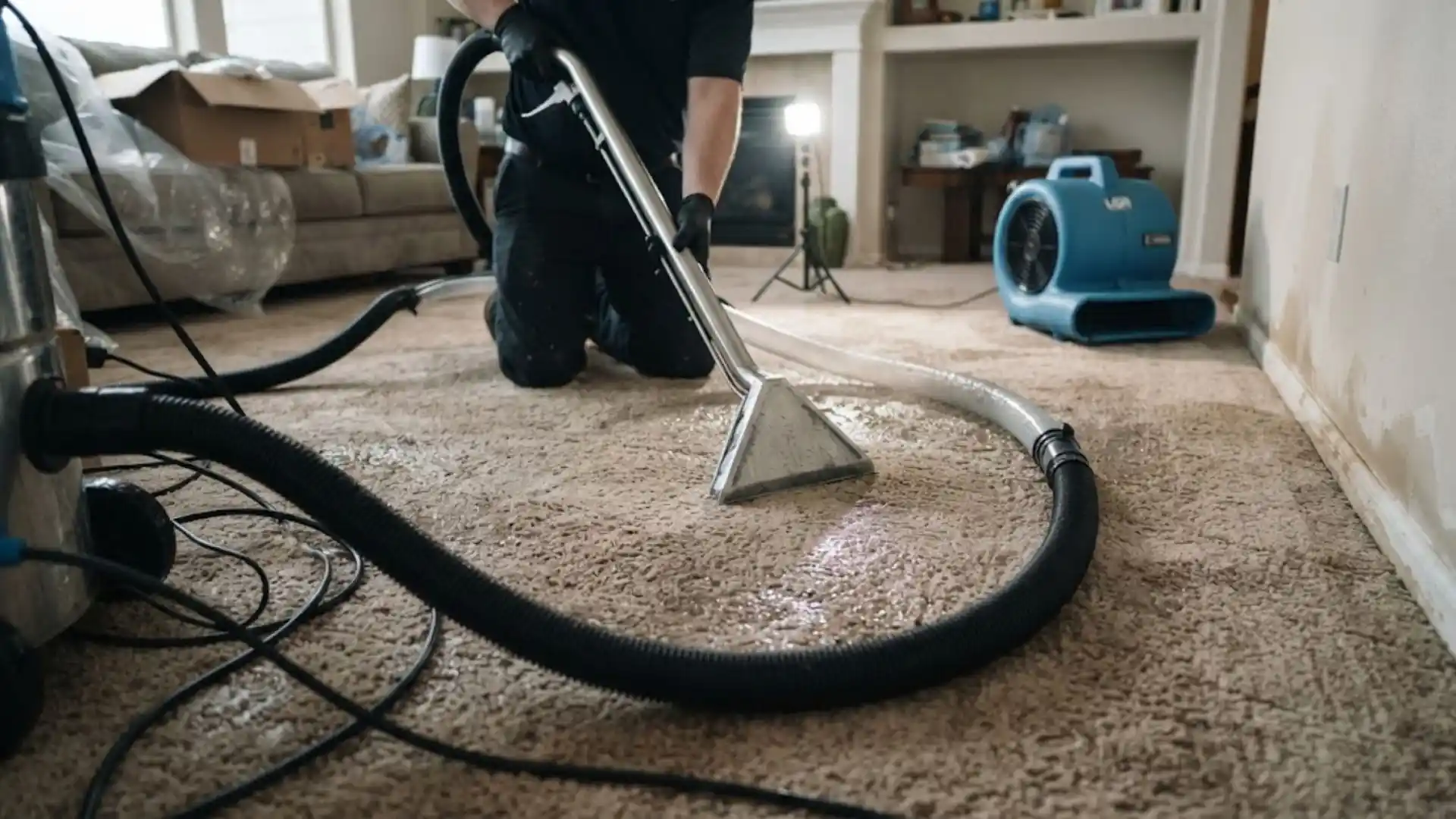
Carpet holds water differently than hard flooring does, the padding underneath can stay saturated for days even after the surface feels dry, which is why carpet water damage often…
Carpet holds water differently than hard flooring does, the padding underneath can stay saturated for days even after the surface feels dry, which is why carpet water damage often gets underestimated until a musty smell shows up weeks later. In Pleasant Grove, carpet damage calls are most common after basement flooding during spring snowmelt or a burst pipe upstairs that drips down through a floor into a carpeted room below.
Whether carpet can be saved depends mostly on two things: how quickly extraction started, and whether the water was clean or contaminated. Clean water extracted within 24 to 48 hours can often be dried and salvaged along with its padding. Water that sat longer, or that came from a sewage backup, usually means the padding and sometimes the carpet itself need to be replaced.
If carpet water damage follows a ceiling leak from an upstairs bathroom, we treat the carpet extraction as connected to the ceiling repair rather than a separate job, since both trace back to the same source and the timeline for addressing each affects the other, drywall debris from a ceiling repair can recontaminate carpet that's already been cleaned if the sequencing isn't planned correctly.
When carpet is salvageable, we typically detach and lift it during the drying process rather than drying it in place, since this allows both the carpet and the padding underneath to dry independently and lets us inspect the subfloor itself for any moisture that soaked all the way through.
When carpet is being dried in place, we check back daily rather than assuming the initial equipment placement will finish the job correctly on its own without any adjustment.
Snowmelt or plumbing failures soaking carpet and padding below grade.
Upstairs leaks dripping down into carpeted rooms below.
Washing machine or water heater leaks reaching adjacent carpeted areas.
Contaminated water requiring carpet and padding removal rather than drying.
A crew can begin assessment today.
Sub-surface extraction tools pull water out of carpet and padding.
Determining whether the water is clean, gray, or Category 3 contaminated.
Salvageable carpet is dried in place; contaminated or long-soaked carpet is removed.
Antimicrobial treatment to prevent musty odor and mold in remaining padding.
Ranges are typical starting points. A same-day, no-obligation assessment confirms exact scope and price in writing before work begins.
Whether we recommend drying carpet in place versus removing it isn't just a cost decision; even when drying in place is technically possible, badly stretched or previously repaired carpet sometimes doesn't hold up to the extraction and drying process as well as newer carpet would.
A typical carpet call involves a homeowner who noticed the carpet felt damp underfoot near an exterior wall days after a storm, well after the initial event, and assumed drying naturally over time. By the time we test the padding underneath, it's often holding significantly more moisture than the visible carpet surface suggested.
Carpet that sits wet for more than 48 hours, even if it doesn't smell yet, has usually crossed the point where padding can be reliably saved, which is part of why we treat carpet water damage calls with the same urgency as any other active water loss.
Not always. Clean water extracted quickly usually can be; carpet exposed to sewage or standing for more than a couple of days usually needs to be replaced.
Often yes, padding absorbs and holds water longer than carpet fiber and is more prone to developing a musty smell or mold if not fully dried or replaced.
We use specialized extraction tools and air movers positioned to pull moisture up through the carpet from the padding below.
With prompt extraction and antimicrobial treatment, yes. A lingering musty smell days later usually means moisture is still trapped in the padding or subfloor.
Yes, when a ceiling leak and carpet damage share the same cause, we coordinate both parts of the job together rather than treating them as unrelated visits.
Call now for emergency dispatch anywhere in Pleasant Grove and Utah County.
☎ Call (385) 410-8926