Flood damage restoration covers the full rebuild after a significant water loss, not just extraction and drying, but the drywall, flooring, trim, and paint work needed to bring a…
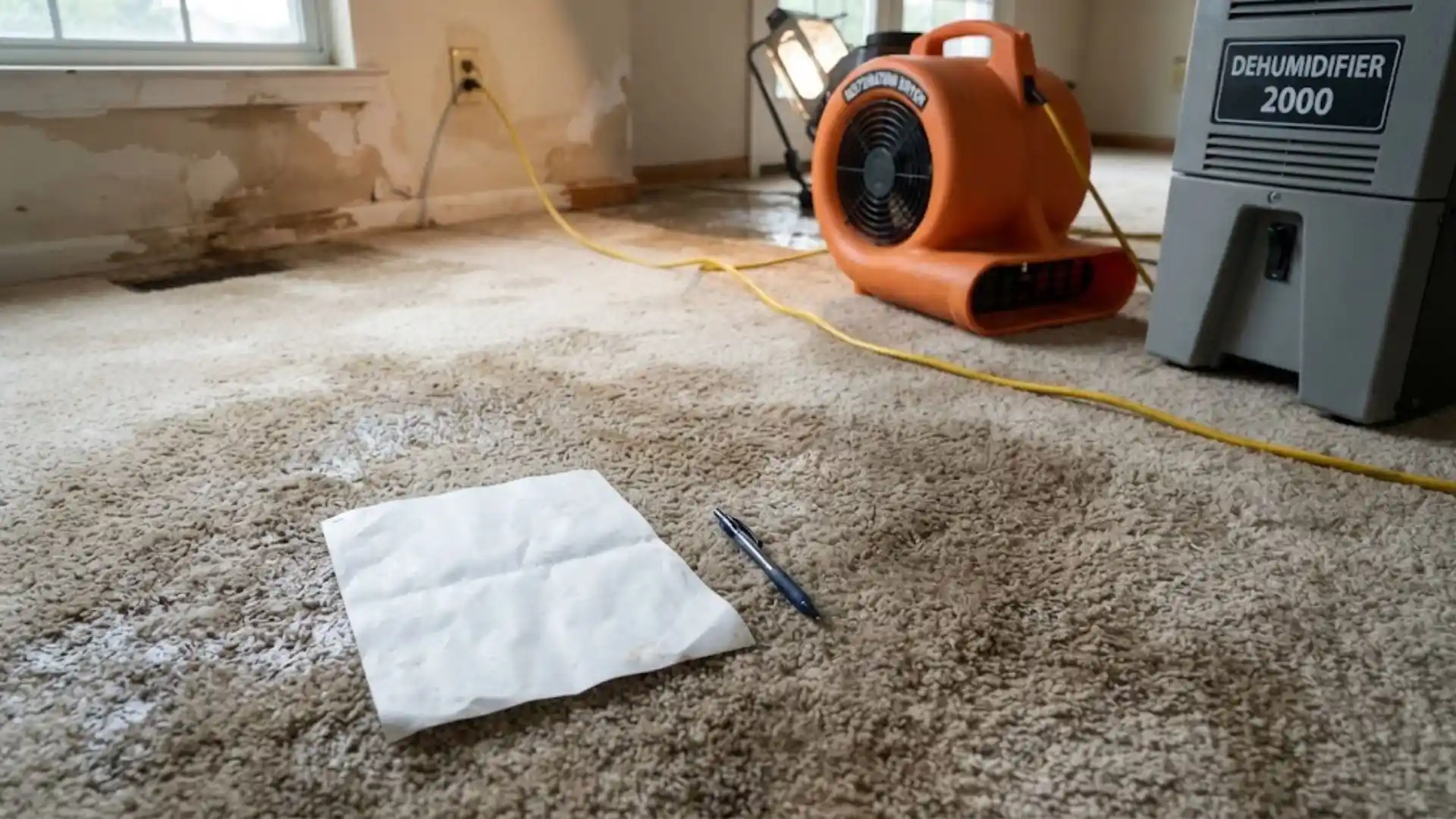
Flood damage restoration covers the full rebuild after a significant water loss, not just extraction and drying, but the drywall, flooring, trim, and paint work needed to bring a Pleasant Grove home or business back to its pre-loss condition. This is typically the service that follows mitigation on larger losses, like a basement that flooded during spring snowmelt or a summer storm event that affected multiple rooms.
Because flood restoration usually involves an insurance claim, we build the rebuild scope around the documentation your adjuster needs: an itemized list of what was removed and why, photos at each stage, and a written timeline from extraction through final finishes. That paper trail tends to matter as much as the physical work when it comes to how smoothly a claim moves.
Utah County building permits are typically required for structural rebuild work beyond simple drywall replacement, and Pleasant Grove's permitting requirements can add time to a larger restoration timeline that homeowners don't always anticipate when budgeting for how long a rebuild will take. We factor permit lead time into the written schedule we provide rather than quoting only the hands-on construction time.
We sequence demolition and rebuild carefully around drying verification, since starting reconstruction before moisture readings confirm the space is fully dry is one of the more common mistakes that leads to a mold problem showing up behind brand-new drywall a few months later.
We walk through material selections with you before ordering anything, since matching an existing floor or trim style sometimes takes a bit of searching and it's better to know that upfront than mid-project.
Every rebuild also includes a final punch-list walkthrough with you before we consider the job complete, so any small touch-ups get caught before we pack up rather than becoming a follow-up call later.
Basement and lower-level flooding from Timpanogos runoff.
Multi-room flooding from summer downpours overwhelming drainage.
Large-volume plumbing failures affecting multiple rooms or floors.
Category 3 losses requiring both remediation and full material replacement.
A crew can begin assessment today.
Mitigation completed and verified before rebuild work begins.
Removal of drywall, flooring, and trim that can't be salvaged.
Framing, drywall, flooring, and trim replacement.
Paint, texture matching, and final walkthrough.
Ranges are typical starting points. A same-day, no-obligation assessment confirms exact scope and price in writing before work begins.
Rebuild costs after a flood vary enormously based on finish level. Restoring a basic, unfinished basement to a simple, functional state costs far less than restoring a fully finished basement with custom trim, built-ins, and higher-end flooring, since matching those original finishes is where much of the rebuild cost concentrates.
A typical flood restoration project moves through a fairly predictable sequence once mitigation is complete: a walkthrough to finalize exactly what's being replaced versus repaired, a materials selection conversation matched to what's realistic to source, then demolition, rebuild, and final finishes, usually with a documented schedule shared with both the homeowner and their adjuster.
Rebuilding over materials that weren't fully dried, in an effort to move the project along faster, is one of the more expensive mistakes possible in flood restoration, since it typically means redoing the same work later once trapped moisture causes a problem behind the new finishes.
A single room can take 1 to 2 weeks; multi-room or structural rebuilds often run 4 to 8 weeks depending on permitting and material availability.
We do our best to match existing trim, paint, and flooring, though some materials may need to be sourced from a different batch or supplier if the original is discontinued.
We don't file the claim on your behalf, but we provide the documentation and communicate directly with your adjuster to support it.
Emergency mitigation typically starts immediately regardless of claim status; larger rebuild work is usually scheduled once scope and coverage are confirmed.
Structural work beyond basic drywall and flooring replacement typically requires a permit through Pleasant Grove city; we account for that lead time in the project schedule we provide.
Call now for emergency dispatch anywhere in Pleasant Grove and Utah County.
☎ Call (385) 410-8926