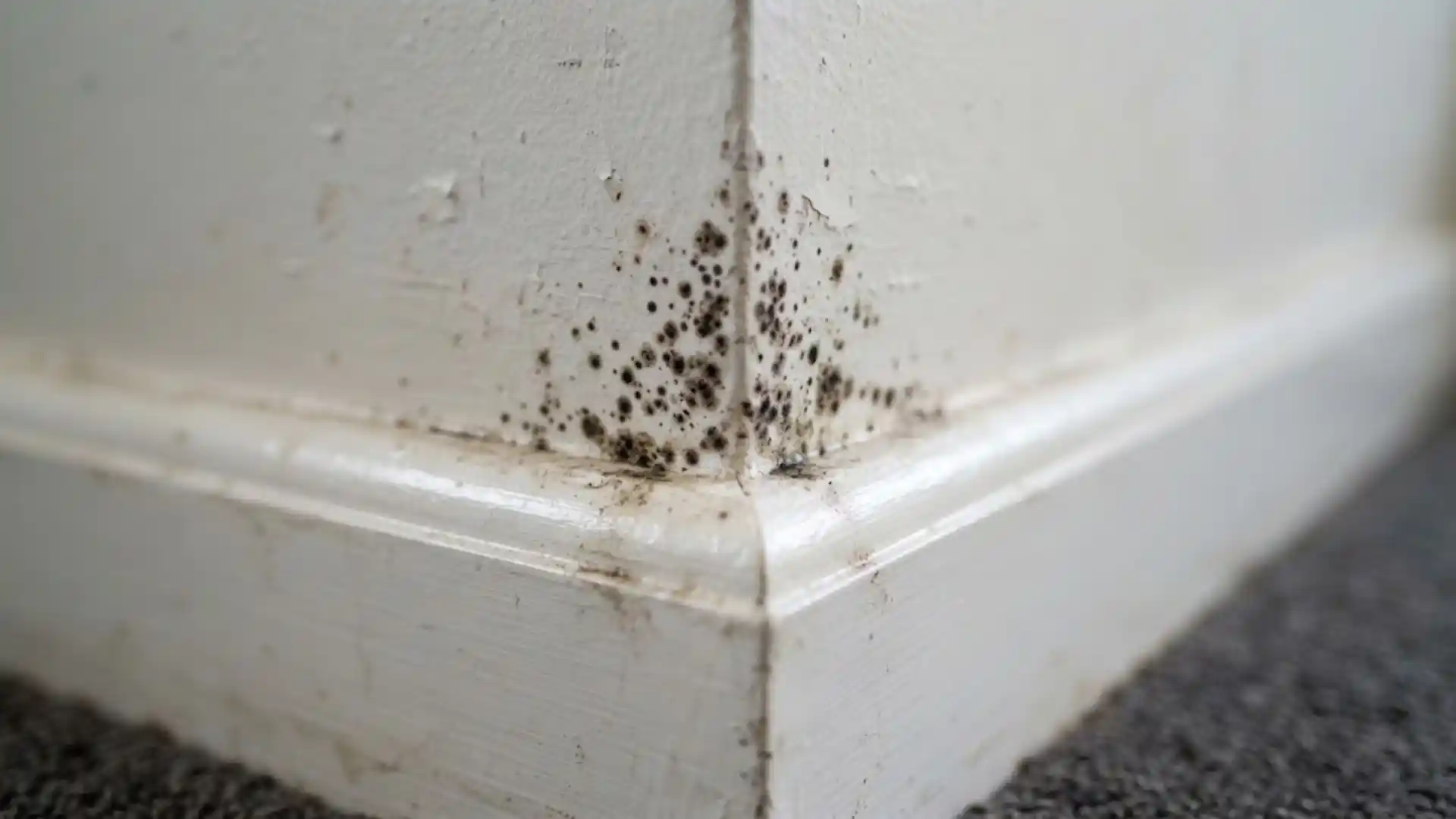
Bathrooms are one of the most common spots for condensation-triggered mold in Pleasant Grove homes, thanks to daily humidity from showers combined with exhaust fans that are…
Bathrooms are one of the most common spots for condensation-triggered mold in Pleasant Grove homes, thanks to daily humidity from showers combined with exhaust fans that are undersized, poorly vented, or simply not run long enough after use. Grout lines, ceiling corners above the shower, and the wall cavity behind a tub surround are the usual starting points.
Removal in a bathroom setting requires care around fixtures and finishes that need to stay functional afterward, we work around tile, grout, and caulking to remove affected material without unnecessarily damaging surfaces that aren't part of the problem.
A bathroom exhaust fan that's more than 10 to 15 years old is often undersized for the room by current ventilation standards, even if it's still functioning. When we find recurring bathroom mold tied to inadequate ventilation, upgrading to a properly sized, quieter fan is frequently a more effective long-term fix than repeated remediation of the same spot.
When grout and caulk need replacement as part of mold removal, we use a mold-resistant caulk formulation rather than standard caulk, given the moisture history of the space, which tends to hold up longer against the humidity a bathroom generates on a daily basis.
We check the exhaust fan's actual airflow, not just whether it turns on, since a fan that runs but moves very little air provides much less benefit than it appears to.
We recommend a follow-up look in a few months for any bathroom that's had a recurring mold issue, just to confirm the ventilation fix is actually holding up under regular use.
We test the surrounding area with a moisture meter even after visible mold is removed, since a bathroom wall can hold residual dampness longer than it takes the surface to dry.
Fans that are undersized, poorly vented, or rarely used.
Deteriorated grout or caulk allowing moisture behind tile.
Bathrooms without windows or with doors kept closed after use.
Slow leaks around a tub, shower pan, or supply line contributing hidden moisture.
A crew can begin assessment today.
Confirming whether the cause is ventilation, a leak, or both.
Protecting adjacent living space during removal.
Removing affected grout, drywall, or caulking as needed.
Flagging exhaust fan or airflow improvements to prevent recurrence.
Ranges are typical starting points. A same-day, no-obligation assessment confirms exact scope and price in writing before work begins.
Costs stay relatively low when mold is limited to grout and caulk, but increase meaningfully if moisture has reached the wall cavity behind tile, since that scenario requires partial demolition rather than surface cleaning alone.
A typical bathroom mold call involves dark spots along grout lines near the shower that a homeowner has been scrubbing periodically for months, not realizing the surface cleaning wasn't addressing mold that had already established itself within the porous grout material.
Bathroom mold that's only wiped away cosmetically without addressing the underlying grout, caulk, or ventilation issue typically returns within weeks, since surface cleaning doesn't remove mold that's established in the porous grout material itself.
Grout-level mold is usually a surface issue rather than a structural health hazard, but it's worth addressing early since it can indicate a ventilation problem that could get worse.
Running the exhaust fan for a full 20 to 30 minutes after a shower, rather than shutting it off immediately, makes a significant difference in preventing recurring mold.
Only if the cavity behind the tile is affected; surface mold on grout and caulk usually doesn't require tile removal.
Yes, a slow leak around a tub or shower pan can feed mold growth in a wall cavity for a long time before it becomes visible or starts to smell.
Ventilation standards have changed over the years, so a fan installed more than a decade ago may be undersized by current guidelines even if it still runs; an inspection can confirm whether an upgrade would help.
Call now for emergency dispatch anywhere in Pleasant Grove and Utah County.
☎ Call (385) 410-8926