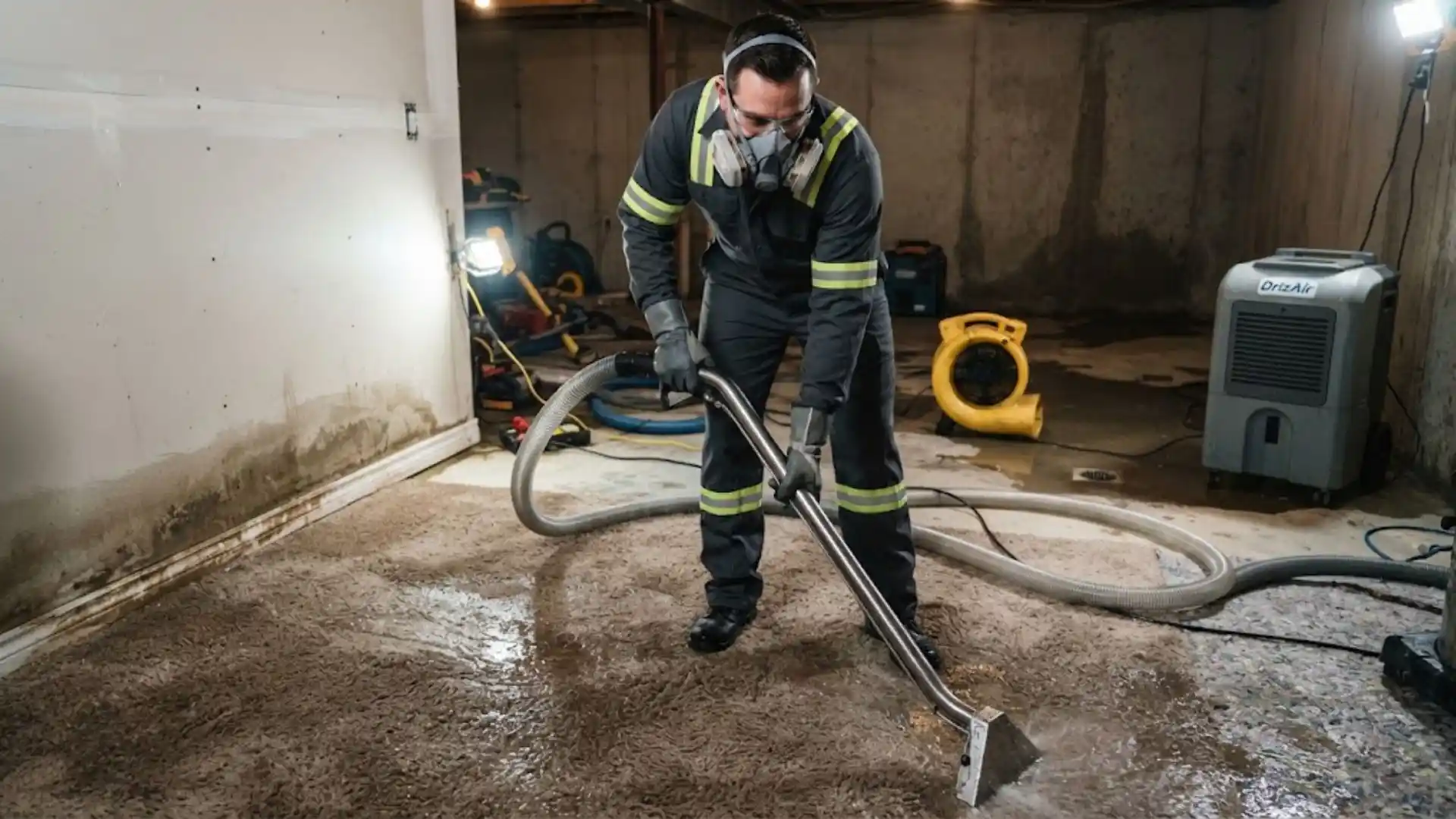
Sewage cleanup is treated as its own category of water loss because contaminated, or Category 3, water carries health risks that clean water doesn't. In Pleasant Grove, sewage…
Sewage cleanup is treated as its own category of water loss because contaminated, or Category 3, water carries health risks that clean water doesn't. In Pleasant Grove, sewage backups typically trace back to one of two causes: an aging municipal or lateral sewer line backing up into a home's lowest drain, or a private septic or sewer line failure on older properties near the historic city center.
Because of the contamination risk, sewage cleanup follows a stricter protocol than a standard water loss, porous materials that contacted sewage, including carpet, padding, and some drywall, are generally removed rather than dried, and all affected surfaces are disinfected with EPA-registered products before the space is considered safe.
Some Pleasant Grove homeowner policies specifically exclude sewer and drain backup unless an endorsement was purchased separately, which surprises people during an already stressful sewage event. We recommend checking your policy's sewer backup coverage proactively, before an event happens, since it's a relatively low-cost addition on most policies and it's one of the more common exclusions we encounter after the fact.
Crews handling sewage cleanup wear full personal protective equipment throughout the job, including respirators and disposable suits, given the bacteria and pathogen exposure risk in Category 3 water. This isn't a job we recommend attempting without that equipment, regardless of how contained the visible spill might look.
All contaminated materials removed during a sewage job are bagged and disposed of according to standard biohazard handling practices, not simply placed in regular household trash.
Air quality in the affected space is checked before we consider a sewage job complete, not just surface cleanliness, since airborne contamination can linger even after visible cleanup is done.
We also flush and disinfect any fixtures connected to the affected line as part of the job, not just the visibly contaminated floor or wall areas.
City sewer lines backing up into a home's lowest-level drains.
Private sewer lines connecting a home to the municipal system failing or clogging.
Older properties on septic systems experiencing a backup or overflow.
Heavy rain overwhelming combined storm and sewer infrastructure.
A crew can begin assessment today.
Isolating the affected area to prevent contamination from spreading.
Removal of contaminated water using equipment dedicated to Category 3 losses.
Removing porous materials that contacted sewage rather than attempting to dry them.
EPA-registered disinfection of all affected surfaces before clearance.
Ranges are typical starting points. A same-day, no-obligation assessment confirms exact scope and price in writing before work begins.
Sewage cleanup costs run higher than an equivalent clean-water loss primarily because of the material replacement requirement rather than extraction time itself; porous materials that would otherwise be dried and saved in a clean water loss have to be removed and replaced when contaminated.
A typical sewage cleanup call comes in sounding like a routine basement leak at first — a homeowner mentions water on the floor near a drain — until the smell or discoloration on arrival makes clear it's actually a Category 3 loss requiring a different protocol than what was initially described over the phone.
The health risk from a sewage-contaminated space increases the longer it sits unaddressed, since bacteria and pathogens don't dissipate on their own and can be carried further through a home via foot traffic or airflow the longer the contamination remains untreated.
Yes, Category 3 water carries bacteria and pathogens that require protective equipment and proper disposal; we strongly recommend against DIY cleanup of a sewage backup.
Generally no. Carpet and padding that contacted sewage are considered a health hazard and are removed rather than cleaned.
Coverage depends on your policy; many standard policies exclude sewer backup unless a specific endorsement was added. We can help document the loss regardless of coverage.
It requires containment, protective equipment, removal of contacted porous materials, and disinfection steps that aren't necessary for a clean water loss.
Not always, many standard policies exclude sewer and drain backup unless a specific endorsement was added, so it's worth checking your policy before an event happens rather than after.
Call now for emergency dispatch anywhere in Pleasant Grove and Utah County.
☎ Call (385) 410-8926