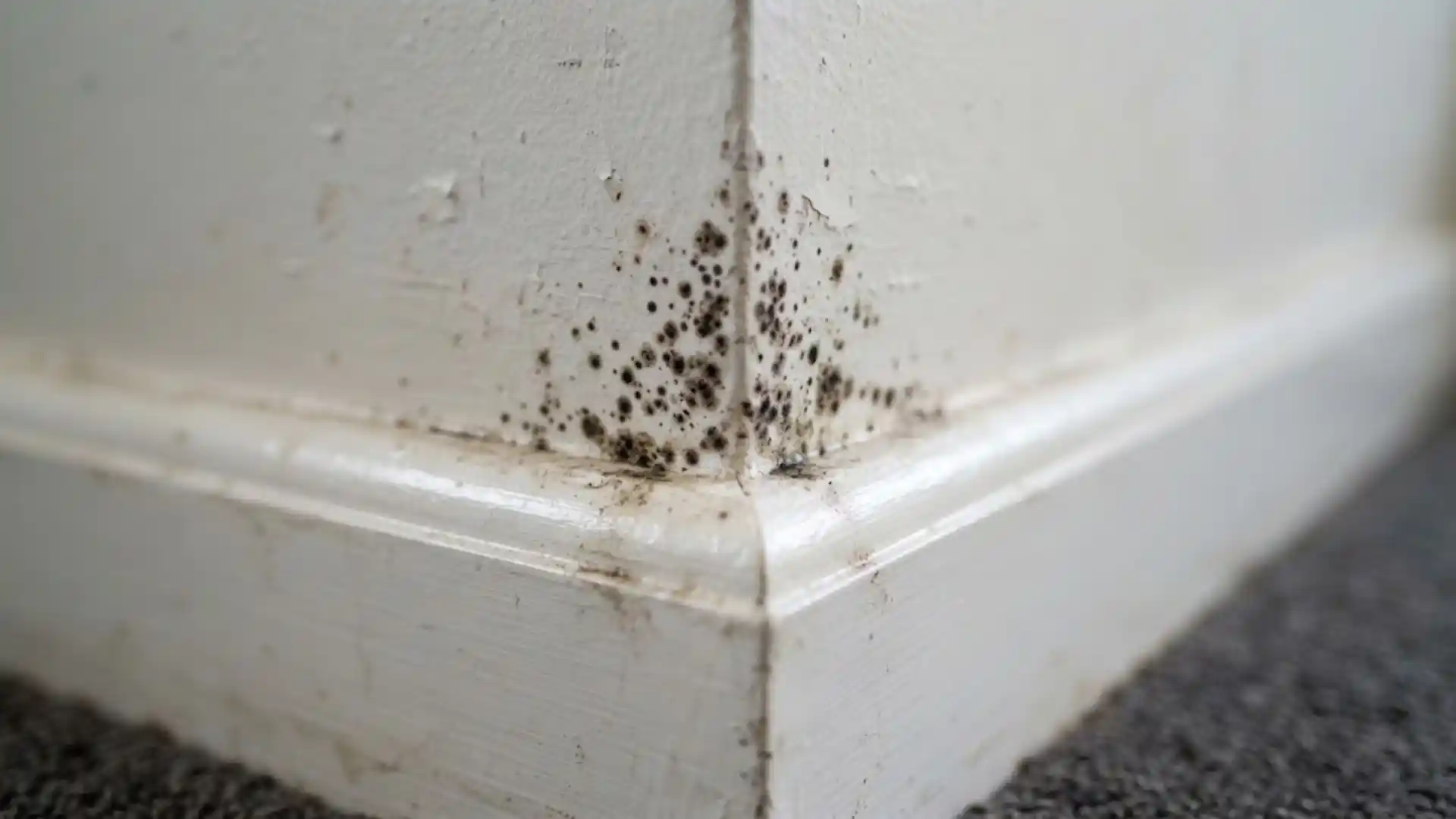
"Black mold" is a term homeowners use for any dark-colored mold, though it most often refers to Stachybotrys chartarum, a species associated with prolonged moisture exposure. In…
"Black mold" is a term homeowners use for any dark-colored mold, though it most often refers to Stachybotrys chartarum, a species associated with prolonged moisture exposure. In Pleasant Grove, we most commonly find dark mold in basements after extended water exposure, in bathrooms with chronic humidity issues, and in attics with long-standing ventilation problems.
Because dark mold is often associated with more prolonged moisture exposure than lighter-colored surface mold, we treat it with a higher level of containment and, where the extent is unclear, recommend testing to confirm the type and scope before finalizing a removal plan.
Homeowners occasionally ask us to identify mold type by sight alone over the phone based on a description or a photo, but color is not a reliable way to determine species, and several common, lower-concern mold types can appear dark or black under certain lighting and moisture conditions. An in-person assessment, and testing where appropriate, gives a far more reliable answer than a visual guess.
Given the enhanced containment and protective equipment involved, dark mold removal jobs typically run slightly longer than a comparable lighter-mold job of the same size, and we build that additional time into the project schedule rather than promising a timeline that doesn't account for the extra precautions.
Because containment for dark mold jobs is more involved, we walk you through exactly what the work area will look like during the project so there are no surprises about visqueen sheeting or negative air equipment in your home.
A final clearance check confirms the space meets a normal indoor air standard before we remove containment, giving you a documented endpoint rather than just our word that the job is done.
Extended moisture from an undried flood or chronic leak.
Long-term condensation issues in poorly ventilated spaces.
Moisture trapped behind finished walls for an extended period.
Mold developing after a water loss that wasn't fully remediated.
A crew can begin assessment today.
Confirming mold type and extent, often with surface or air sampling.
Stricter containment protocols given the moisture history involved.
Removing affected material with full protective equipment for the crew.
Post-removal testing to confirm the area meets a safe standard.
Ranges are typical starting points. A same-day, no-obligation assessment confirms exact scope and price in writing before work begins.
The enhanced containment and protective equipment used for dark mold jobs add cost relative to a standard mold removal of the same size, which is a deliberate tradeoff for reduced cross-contamination risk during removal rather than an arbitrary upcharge.
A typical dark mold discovery happens in a space that's had a moisture problem for a while without anyone fully addressing it — a chronically damp basement corner, or an area behind furniture that's rarely moved — rather than following a single recent, sudden water event.
Because dark mold is associated with more prolonged moisture exposure, delaying assessment further compounds an already extended timeline, which is part of why we prioritize a prompt inspection when a homeowner describes symptoms consistent with long-term moisture rather than a recent, isolated event.
Prolonged exposure to any mold type can affect indoor air quality; dark mold associated with long-term moisture is treated with extra caution and often testing to confirm exactly what's present.
It depends on the location and extent; contained, isolated removal often doesn't require relocation, but larger or more central affected areas sometimes do.
Testing is the reliable way to confirm; dark discoloration from dust or dirt can look similar to mold without lab confirmation.
It can if the underlying moisture source isn't addressed, which is why we pair removal with identifying and flagging the root cause.
Not reliably, color alone doesn't determine mold species or risk level, since several common and lower-concern mold types can also appear dark; an in-person assessment or lab test gives a much more reliable answer.
Call now for emergency dispatch anywhere in Pleasant Grove and Utah County.
☎ Call (385) 410-8926