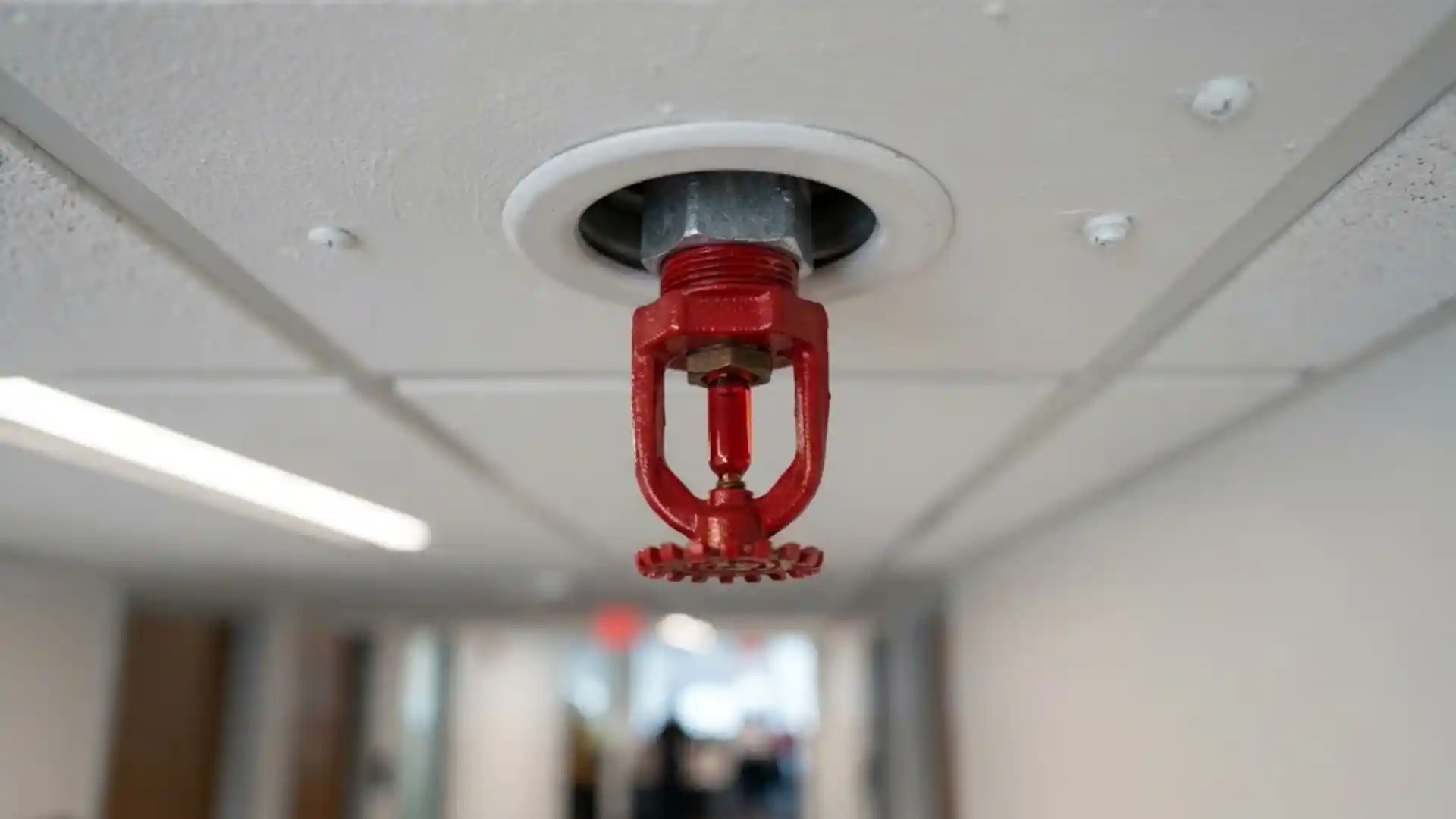
When a commercial fire sprinkler system activates, either from an actual fire or a false trigger, the water damage that follows is sometimes more extensive than the fire event itself would have caused on its own. A single sprinkler head can release a substantial volume of water per minute, and unlike a controlled extinguishing method, a sprinkler system doesn't stop until it's manually shut off or the fire department arrives to do so.
Why Sprinkler Water Damage Catches Businesses Off Guard
Business owners often focus their fire preparedness thinking on the fire itself (smoke detectors, extinguishers, evacuation plans) without fully accounting for what happens after a sprinkler system does its job successfully. A sprinkler that activates and puts out a small, contained fire has technically succeeded at its purpose, but the water discharged in the process can spread across a much larger footprint than the fire ever reached, soaking flooring, inventory, and equipment throughout the affected area and sometimes into neighboring units in a multi-tenant building.
False Activations Happen More Than You'd Think
Not every sprinkler activation follows an actual fire. Mechanical failures, freezing in an unheated area of a building, accidental impact damage to a sprinkler head, or age-related corrosion in older systems can all trigger a discharge with no fire present at all. From a water damage standpoint, the response is identical either way (the water still needs to be extracted and the space dried), but a false activation can be a particularly frustrating type of loss for a business owner who had no actual fire event to point to.
What The Response Actually Involves
The first priority after any sprinkler discharge is stopping the water flow, typically by shutting off the system at its control valve, which is a step that often requires either building maintenance staff or the fire department depending on how quickly it's identified. Once the water is stopped, extraction needs to begin promptly across the full affected area, not just the room where the sprinkler activated, since water travels along flooring and through any floor penetrations to adjacent spaces.
Inventory And Equipment Assessment
For a retail or restaurant business, sprinkler water damage often affects inventory and equipment in addition to the building structure itself, and this content needs its own separate damage assessment. We document affected inventory and equipment with photos as part of the overall commercial water damage restoration scope, distinct from the structural extraction and drying work, since insurance claims for contents versus structure are often handled differently even under the same overall policy.
Coordinating With The System Itself
Getting a sprinkler system back into service, whether after an actual fire or a false activation, requires coordination with a licensed fire protection contractor, separate from the water damage cleanup itself. We work around that system restoration timeline, since a business sometimes can't legally reopen without a functioning sprinkler system back in place, which can affect how the overall restoration and reopening schedule gets sequenced.
This is a consideration for any commercial property in Orem or elsewhere in Utah County with sprinkler-equipped buildings, particularly older systems more prone to age-related false activations.
How Often False Activations Actually Happen
While exact figures vary by building age and maintenance history, false or accidental sprinkler activations are a well-documented category of commercial fire protection incidents, often outnumbering activations from actual fires in older systems that haven't been regularly serviced. Common triggers include a sprinkler head struck by equipment like a forklift or ladder, corrosion in an aging system causing a head to fail, or freezing in an unheated area of a building where a wet-pipe system wasn't designed for that temperature exposure. Regular inspection and maintenance of a commercial sprinkler system, typically required by fire code on a set schedule, significantly reduces false activation risk, which is worth confirming is being kept current if your building's system is more than a decade or two old.
What Insurance Typically Covers For A False Activation
Most commercial property policies cover water damage from a sprinkler discharge regardless of whether it was triggered by an actual fire or a mechanical failure, since the water damage itself is treated as a covered peril either way under most standard commercial policies. What can vary is whether the cost of repairing or servicing the sprinkler system itself is covered, which sometimes falls under a separate equipment or mechanical failure provision rather than the general property damage coverage. It's worth reviewing your specific commercial policy's language on this distinction, ideally before an activation happens rather than during the claims process.
A Question Worth Asking Your Building Manager
If you lease commercial space, ask your building manager or landlord when the fire sprinkler system was last inspected and serviced, and whether any parts of the system are original to a building constructed decades ago. Older, poorly maintained systems carry meaningfully higher false-activation risk, and knowing this in advance helps you plan for the possibility rather than being caught off guard.
And if you're a tenant rather than a property owner, review your own commercial policy's business interruption and contents coverage now, since a sprinkler-related closure affects your operations the same way a fire would, regardless of which triggered the actual water damage.
Business owners leasing space in an older commercial building may not have visibility into when the sprinkler system was last serviced, since that responsibility often sits with the property owner rather than the tenant. It's a reasonable question to raise during lease renewal or renewal of your own business insurance, simply so you know what you're working with.
Whether the trigger was an actual fire or a mechanical failure, the water damage response itself follows the same careful process, prioritizing speed and thorough documentation either way, since the water doesn't know or care what set the sprinkler off in the first place.
The Bottom Line
Fire sprinkler water damage is a real and sometimes underestimated risk separate from fire damage itself, whether the activation follows an actual fire or a mechanical false trigger. Rapid extraction and a documented content assessment matter just as much here as in any other significant commercial water loss.