Finding standing water in a basement is stressful enough without also having to figure out what to do first. The actions you take in the first 30 minutes after discovering a flood can meaningfully affect both your safety and how much of the space can ultimately be saved.
Step One: Address Safety Before Anything Else
Before doing anything else, avoid stepping into standing water if there's any chance it's in contact with electrical outlets, extension cords, or appliances plugged in near floor level. Water and electricity are a genuinely dangerous combination, and if you're unsure whether it's safe, shut off power to the affected area at the breaker panel from a dry location, or wait for a professional to do it safely if the panel itself is difficult to reach without crossing standing water.
Step Two: Identify And Stop The Source, If Possible
If the flooding is coming from an identifiable source (a burst pipe, a failed water heater, a washing machine supply line) shutting off the water at that fixture or at the home's main shutoff valve stops the situation from getting worse while you wait for help. If the source is external, like spring snowmelt or storm water entering through a window well, there often isn't a simple shutoff, and the priority shifts to getting extraction started as quickly as possible instead.
Step Three: Call For Extraction Right Away
The single biggest factor in how much of a flooded basement can be saved is how quickly extraction starts. Drywall begins wicking water upward within hours, carpet padding holds moisture long after the surface looks dry, and materials that sit in water for more than a day or two are far more likely to need replacement rather than drying. Calling water mitigation as soon as you discover the flood, rather than waiting until morning or until you've tried to handle it yourself, meaningfully changes the outcome for what can be saved.
Step Four: Document Before You Move Anything
If your schedule allows even a couple of minutes before help arrives, take photos or video of the standing water and any visibly affected belongings before moving anything. This documentation is genuinely useful for an insurance claim later, and it's much easier to capture in the moment than to reconstruct afterward from memory.
Step Five: Move What You Reasonably Can
If it's safe to do so, lifting boxes, furniture, and stored items off the floor and out of standing water can prevent additional loss while you wait for a crew. Don't put yourself at risk moving heavy or waterlogged items alone, and don't delay calling for help in order to save belongings, the structural drying timeline matters more than any individual item in most cases.
What Happens When A Crew Arrives
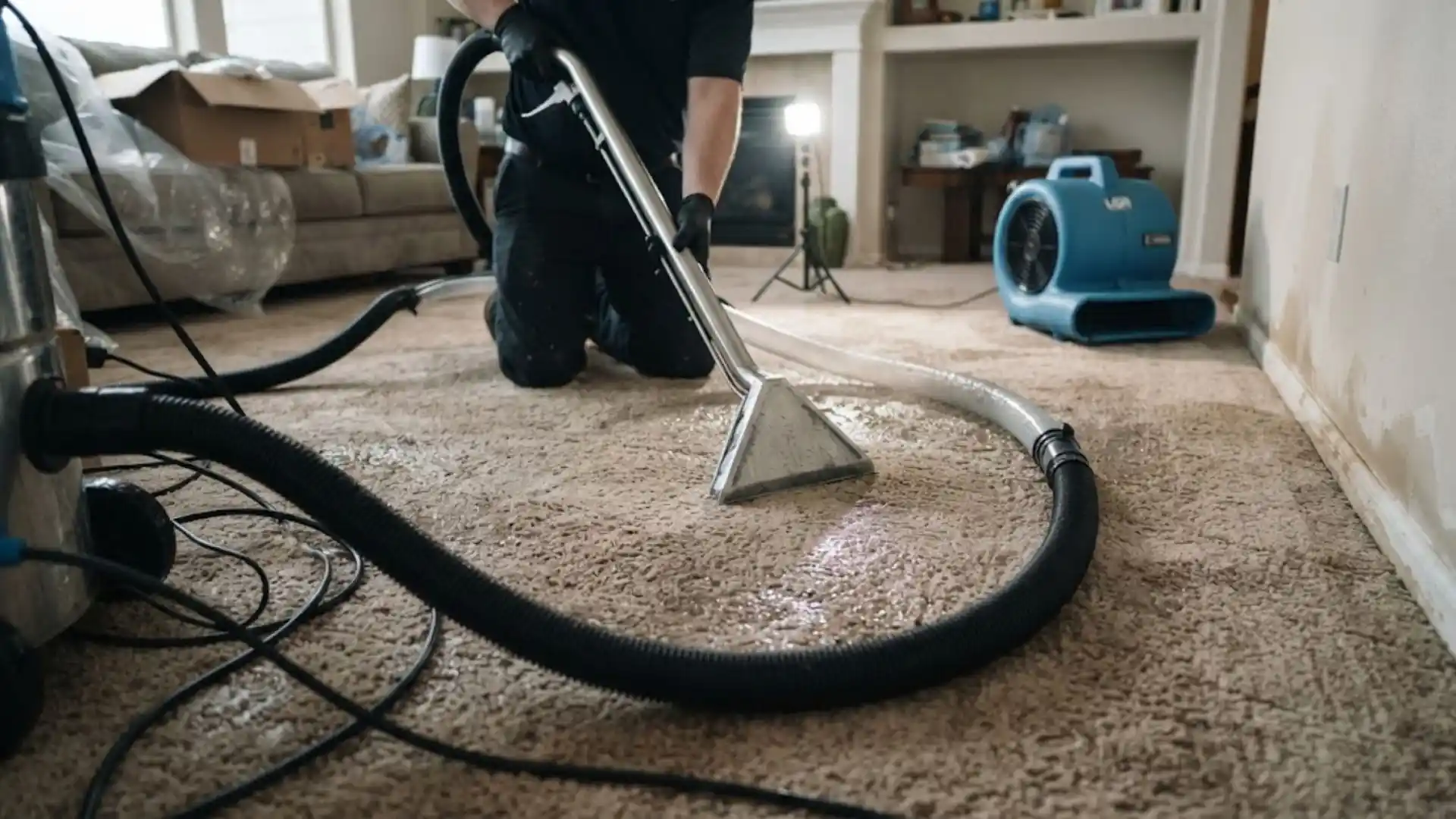
Once on-site, extraction starts immediately, followed by an assessment of what's salvageable versus what needs to be removed. In Pleasant Grove specifically, we also check for ongoing groundwater intrusion through the slab, since the area's clay-heavy soil can keep pushing moisture through a foundation for days after a heavy rain or fast snowmelt, even after the visible flood is pumped out. If the basement is finished and has been flooded for an extended period, a flooded basement cleanup typically includes removing baseboards and drywall that've wicked water upward, since these materials usually can't be fully dried and can trap moisture behind a wall that looks fine on the outside.
This same immediate-response approach applies wherever a basement flood happens in Utah County, including in neighboring Lindon, where the same creek drainage and clay-soil pattern produces similar seasonal flooding.
What Not To Do, Even Though It's Tempting
A few instincts that feel productive in the moment can actually make things worse. Running a household wet-dry vacuum for hours to try to handle extraction yourself before we arrive sometimes gives a false sense that the situation is under control, when in reality consumer equipment moves a fraction of the water professional extraction equipment does, and the delay in getting proper equipment on-site can matter more than the partial progress made. Similarly, turning on box fans and calling it "drying" without addressing what's happening underneath the surface (in carpet padding, behind baseboards, in subfloor) can dry the visible top layer while leaving trapped moisture to become a mold problem within the same week.
What To Tell Dispatch When You Call
A few specific details help us prepare the right equipment and crew size before we even arrive: roughly how large an area is affected, whether the water appears clean or has any odor suggesting a sewage component, whether the water is still actively rising or has stabilized, and whether the source has already been identified and stopped. You don't need to have this all figured out perfectly (a rough description is enough) but the more detail you can give, the better prepared the responding crew will be when they arrive.
Keeping This Guide Somewhere You'll Actually Find It
Consider saving our dispatch number directly in your phone now, rather than searching for it during an actual emergency when you're stressed and the basement is actively flooding. A saved contact takes ten seconds to add and can save valuable minutes exactly when those minutes matter most for how much of your basement ends up salvageable.
And if this isn't your first basement flood, take a few minutes once things are resolved to think through what changed this time versus last time, since patterns across multiple events often reveal the actual root cause more clearly than any single incident does on its own.
None of this requires special training or equipment on your part. The goal in those first 30 minutes is simply to avoid making the situation worse while getting a professional crew moving toward your property as quickly as possible.
Every basement flood is a little different, but the underlying priorities stay the same: safety, stopping the source if possible, and getting extraction started as quickly as you reasonably can.
The Bottom Line
Safety first, stop the source if you can, call for extraction immediately, document what you reasonably can, and don't delay professional help while trying to handle everything yourself. The first half hour after discovering a flood matters more than almost any other point in the entire restoration process.