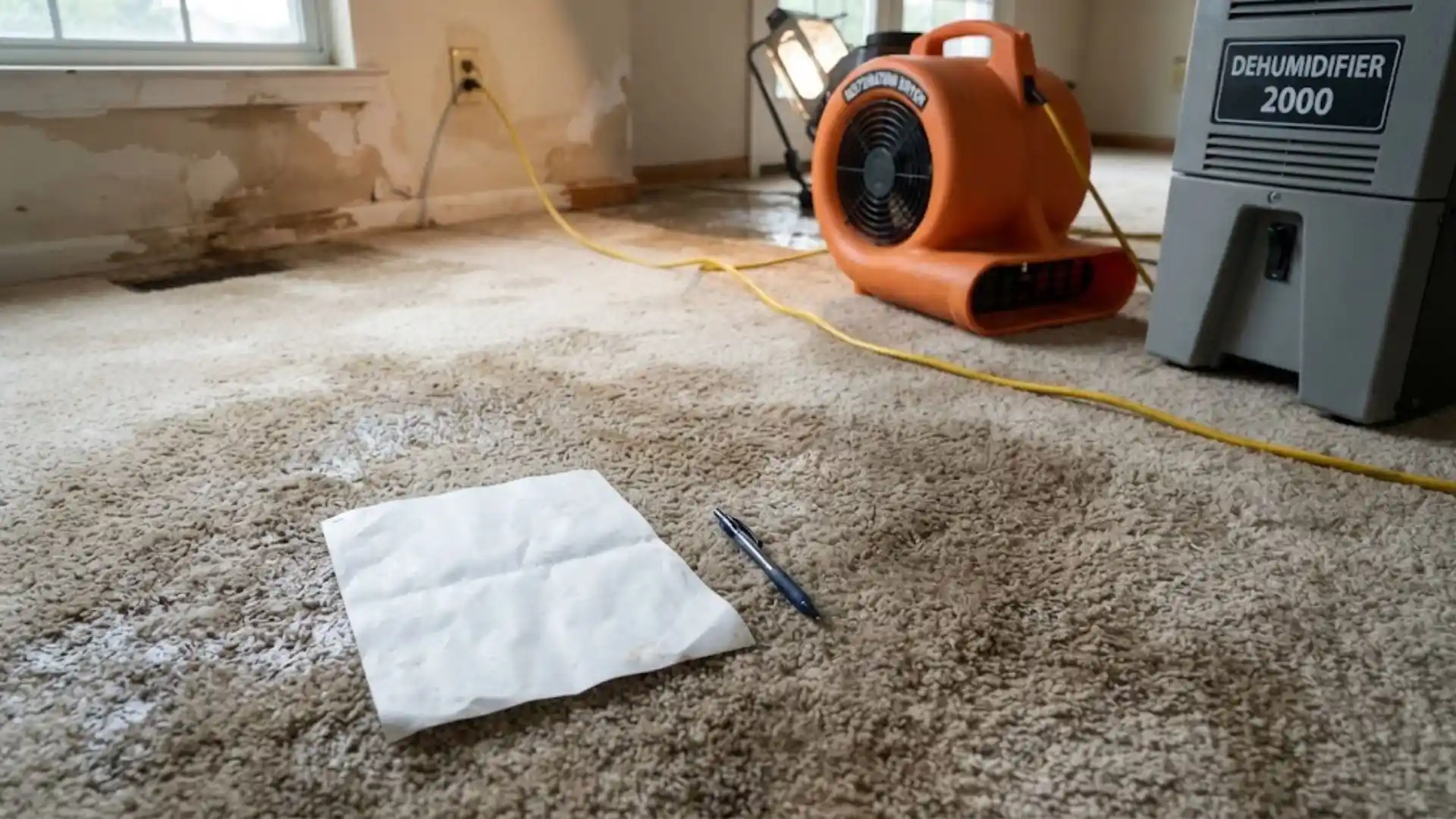
A common source of frustration after a water damage claim isn't whether the damage was covered at all, it's discovering that the insurance payout is meaningfully smaller than what it actually costs to replace what was damaged. In most cases, this comes down to a distinction buried in the policy's fine print: actual cash value versus replacement cost coverage.
The Core Difference
Replacement cost coverage pays what it actually costs today to repair or replace damaged property with something of similar kind and quality, without subtracting anything for the item's age or wear. Actual cash value coverage pays that same replacement cost, but then deducts depreciation based on the item's age and condition at the time of the loss. The gap between these two numbers grows every year an item ages, which is why older carpet, furniture, or appliances damaged in a water loss can end up covered for far less than what a new equivalent costs.
A Concrete Example
Say a burst pipe in a Pleasant Grove home ruins carpet installed ten years ago that would cost roughly $5,000 to replace today. If the insurer determines that carpet has lost, for example, 70 percent of its value to age and wear, an actual cash value payout might come to only around $1,500, a difference that catches a lot of homeowners off guard when the check arrives.
Why This Split Even Exists In A Standard Policy
Many standard homeowner policies, often labeled HO-3, actually split coverage this way by default: the structure of the home itself is typically covered at replacement cost, while personal property (furniture, carpeting, appliances, and other contents) is often covered at actual cash value unless a specific replacement cost endorsement for contents was added. This means a homeowner can have full replacement cost protection for their walls and framing while still facing actual cash value depreciation on the carpet and furniture damaged in the same flood.
What To Check Before You Need It
It's worth calling your insurance agent to specifically ask whether your policy's personal property coverage is replacement cost or actual cash value, since this detail isn't always obvious from a policy summary. If it's actual cash value, ask what a replacement cost endorsement for contents would cost to add, for many homeowners, the additional premium is modest relative to the potential gap in a real claim.
What This Means During A Claim
Some actual cash value policies do allow for a second payment covering the depreciation once repairs or replacement are actually completed, so it's worth asking your adjuster whether that applies to your specific policy rather than assuming the first check is the final word. Thorough documentation matters here too, a detailed inventory with photos of damaged belongings, including their approximate age and condition before the loss, gives an adjuster clearer grounds for an accurate valuation than a vague description submitted after the fact.
When we handle flood damage restoration or a flooded basement cleanup, we document affected contents and materials as part of the overall scope of work specifically because that documentation supports whichever valuation method your policy applies, whether that's replacement cost, actual cash value, or a combination of the two depending on what was damaged.
A Second Example Showing The Real-World Gap
Consider a five-year-old sofa damaged beyond repair in a basement flood, originally purchased for around $2,000. If similar furniture costs about $2,200 to replace today given normal price increases, and the insurer applies a typical depreciation schedule assuming an eight-to-ten-year expected lifespan for upholstered furniture, an actual cash value payout might land somewhere in the range of $1,100 to $1,300, covering roughly half of what a replacement actually costs. A replacement cost policy, by contrast, would pay closer to the full $2,200 needed to buy a comparable new piece, which is the entire point of the coverage difference and why it's worth understanding before a claim happens rather than during one.
Questions Worth Asking Your Agent Directly
Beyond simply asking whether you have replacement cost or actual cash value coverage, it's worth asking your agent a few follow-up questions. First, whether replacement cost coverage, if you have it, applies to all contents or only certain categories. Second, what documentation you'd need to provide to support a replacement cost claim, since some policies require proof of actual replacement rather than just an estimate. Third, whether there's a time limit for submitting that documentation after the initial claim, since some policies require replacement to happen within a specific window, often one or two years, to qualify for the replacement cost payout rather than defaulting to actual cash value.
Don't Wait Until You're Filing A Claim
Understanding your coverage type is only useful if you know it before a loss happens, not after. Set a reminder to review your policy's personal property coverage terms once a year, ideally around your renewal date, so you're never caught off guard by a payout that's smaller than what you'd need to actually replace what was damaged.
And if you're building a home inventory for insurance purposes, which is worth doing regardless of your coverage type, note the approximate purchase date and price for higher-value items, since that detail speeds up the claims process considerably compared to reconstructing it from memory after a loss.
This distinction matters just as much for renters as homeowners, though it plays out differently. A renter's policy has its own actual-cash-value-versus-replacement-cost decision to make for personal belongings, entirely separate from whatever coverage type a landlord carries on the building itself.
Insurance terminology can be dense and easy to skim past when a policy first arrives in the mail. Taking a few minutes to understand this one distinction pays off specifically in the stressful moment a claim actually happens, when the last thing you want is a surprise.
The Bottom Line
Don't assume your homeowner's policy pays full replacement cost for everything damaged in a water loss. Check specifically whether personal property is covered at actual cash value, and consider a replacement cost endorsement if the gap between the two matters to your household's budget after a future claim.