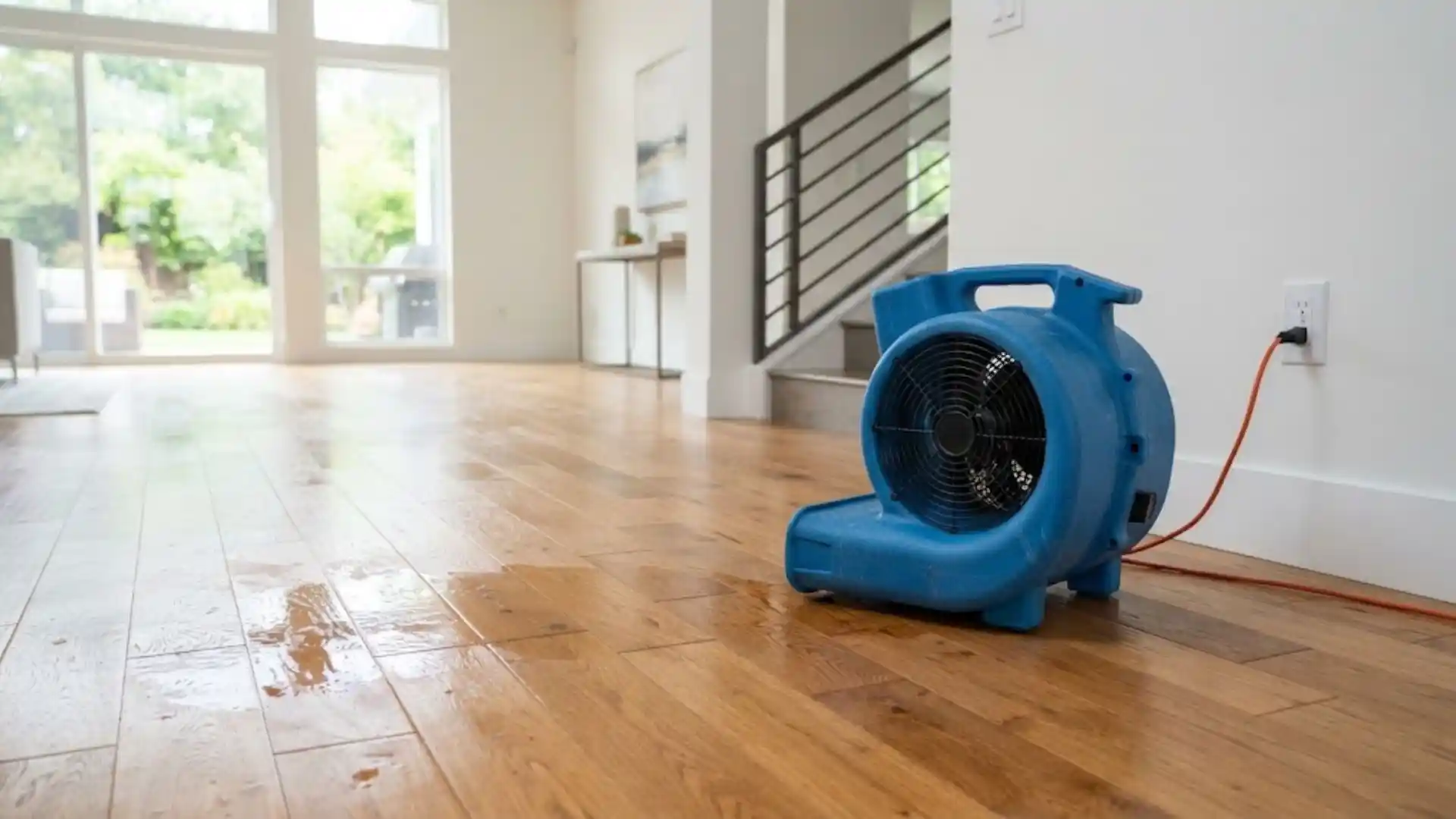
Of all the flooring types in a Pleasant Grove home, hardwood is often the most sensitive to how quickly water is addressed. Unlike carpet, which can hide water in its padding for a while, or tile, which is largely water-resistant on its own, hardwood begins reacting to moisture almost immediately, and the window to save it is shorter than most homeowners expect.
What Actually Happens To Wood When It Gets Wet
Wood is a porous, hygroscopic material, meaning it absorbs and releases moisture based on its environment. When water sits on or under a hardwood floor, individual boards begin absorbing moisture unevenly, typically starting at the seams between boards, where water can wick beneath the surface finish more easily than through the finish itself. As boards absorb water, they swell, and because that swelling isn't perfectly uniform across a floor, boards begin pushing against each other. This is what causes cupping, where the edges of a board rise higher than its center, one of the earliest visible signs of water damage in hardwood.
The Realistic Timeline
Cupping can begin within just a few hours of sustained water exposure, particularly with standing water rather than a light spill that's wiped up quickly. If water is extracted and the area is dried within this early window, many hardwood floors can be saved, sometimes without even needing refinishing. Once cupping has progressed further, or if water exposure continues for a day or more, boards can begin to buckle (lifting away from the subfloor entirely) which typically means at least partial replacement rather than refinishing.
Why Source Matters As Much As Time
Where the water is coming from changes the calculation. A spill from a burst dishwasher line that's caught and extracted within an hour behaves very differently than a slow leak from a hidden pipe that's been wetting the same section of subfloor for weeks before anyone noticed a change in the floor above. In the second scenario, the subfloor itself may have absorbed enough moisture to develop its own problems, including the beginning of mold growth, even before the hardwood surface shows obvious signs.
What We Check Beyond The Visible Floor
When we respond to a hardwood water damage call, we check moisture levels in the subfloor beneath the visible flooring, not just the boards themselves, since a floor that looks fine on top can still have a wet subfloor that will cause problems later if it isn't addressed. Water extraction for hardwood specifically requires care to avoid forcing water further into seams during the extraction process itself, which is part of why we use different techniques for hardwood than we would for a tile or vinyl floor.
Can Cupped Hardwood Be Fixed Without Replacement?
Mild to moderate cupping caught early sometimes resolves on its own once the floor and subfloor are fully dried, as the wood releases the excess moisture it absorbed and gradually returns closer to its original shape. More significant cupping, or any buckling, usually requires sanding and refinishing at minimum, and in more severe cases, replacing individual boards or entire sections. The key variable in every case is how long the moisture was present and how much of it the wood actually absorbed before drying began.
This same urgency applies to hardwood floors throughout Utah County, including homes in Orem with similar housing stock and flooring choices to Pleasant Grove.
How To Check If Your Floor Is At Risk Right Now
If you've had a recent spill or leak near hardwood flooring and aren't sure whether it's already too late, a simple visual check can help. Get down at floor level and look across the surface at a low angle, rather than straight down, which makes subtle cupping much easier to spot than looking straight down at the floor. If boards appear to have slightly raised edges compared to their centers, cupping has already started, though this doesn't necessarily mean the floor is beyond saving, it means the clock is actively running and extraction should happen as soon as possible rather than being scheduled for later in the week.
What Happens During Hardwood-Specific Drying
Drying hardwood flooring after water exposure often takes longer than drying carpet or drywall in the same room, since wood releases absorbed moisture more slowly than it took it on. We typically use specialized drying mats placed directly on the affected flooring, which create a controlled airflow and vacuum effect that pulls moisture up through the wood from below, monitored with moisture meters calibrated specifically for wood species rather than the general-purpose meters used on drywall or subfloor. This process can take several days longer than a comparable drywall or carpet drying job, which is worth knowing so you're not surprised if a hardwood-involved job takes longer than a similar-looking water loss in a carpeted room.
Protecting Hardwood Before A Problem Happens
If you have hardwood flooring near a dishwasher, refrigerator with a water line, or washing machine, consider a simple leak-detection sensor placed nearby, available inexpensively at most hardware stores. These small devices alert you the moment they detect moisture, often catching a slow leak long before it would otherwise be noticed, which is especially valuable for hardwood given how quickly it can be damaged.
And if you're currently shopping for new flooring in an area prone to occasional water exposure, it's worth discussing water-resistant engineered hardwood options with your flooring contractor, since some modern products handle brief water exposure meaningfully better than traditional solid hardwood does.
If you're planning a renovation that includes new hardwood flooring, it's worth asking your installer about moisture barrier options for the subfloor, particularly in rooms adjacent to plumbing fixtures, as a preventive step against exactly this kind of future water exposure.
Hardwood remains a popular flooring choice throughout Utah County precisely because it holds up well over decades under normal conditions. Its sensitivity to water exposure is simply a tradeoff worth understanding, not a reason to avoid it.
The Bottom Line
If you have hardwood flooring and discover a leak or spill, treat extraction as urgent rather than something to handle once you have time. The first few hours are disproportionately important for hardwood specifically, and the difference between calling immediately and waiting until the next day can be the difference between a floor that dries out fine and one that needs partial replacement.