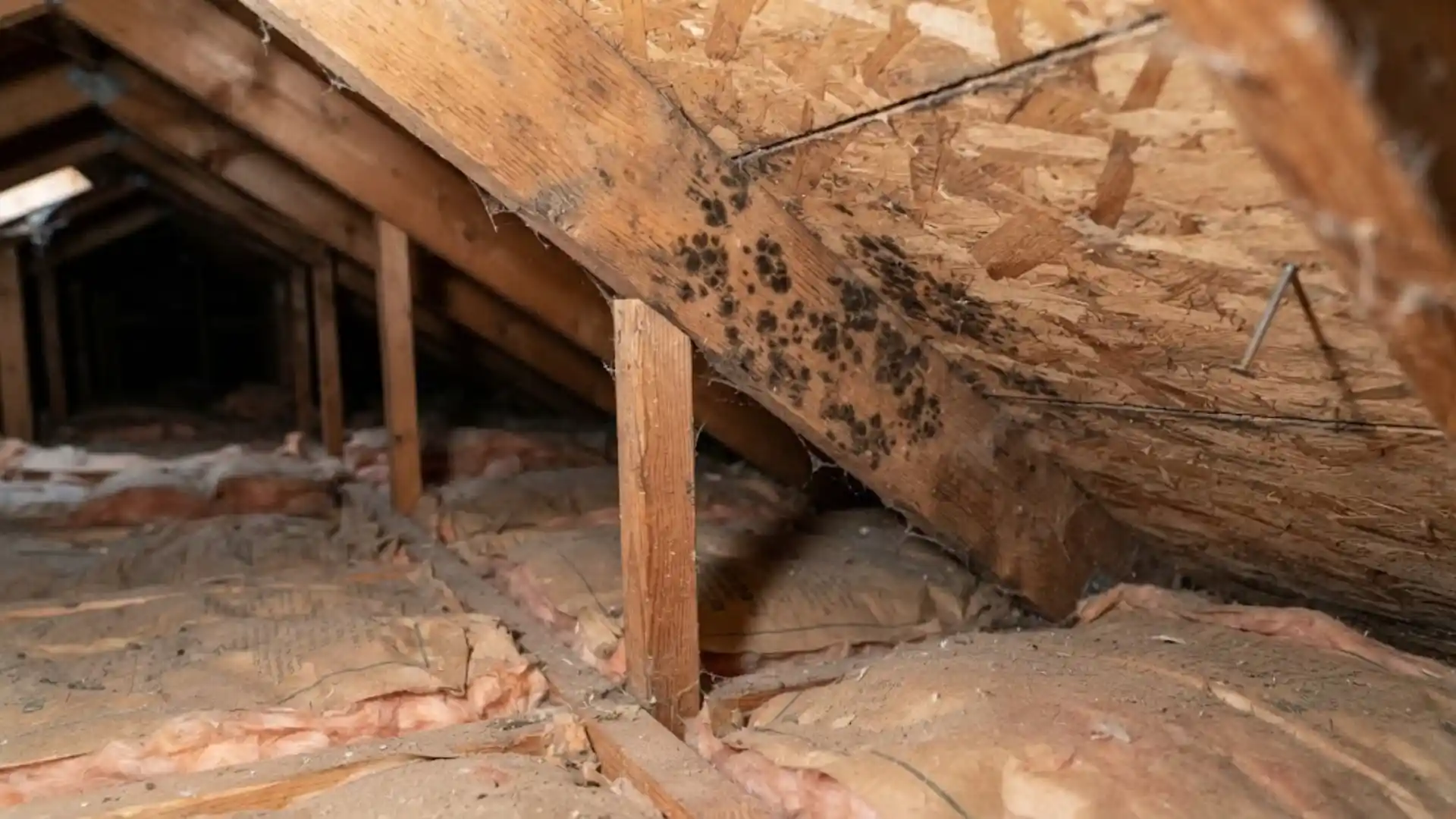
When a Pleasant Grove homeowner finds moisture or mold in an attic, the near-automatic assumption is a roof leak. In most cases, that assumption is wrong. The overwhelming majority of attic moisture problems (some estimates put it above 95 percent) actually come from condensation, not a leaking roof, and mistaking one for the other means paying for the wrong fix.
Why The Confusion Happens
Condensation forms when warm, moist air from inside a home rises into a cold attic and meets the cold underside of the roof sheathing during winter. When that happens repeatedly over a season, it can look remarkably similar to a slow leak: damp insulation, dark staining on the wood, even the occasional drip. A moisture meter alone often can't tell the two apart, which is part of why homeowners and even some contractors misdiagnose the cause.
The Pattern That Actually Distinguishes Them
The most reliable clue isn't the moisture itself, it's the pattern. A genuine roof leak is localized, water enters at one specific point, usually near a roof penetration like a vent, chimney flashing, or a section of damaged shingles, and the resulting staining or mold traces back to that one spot in a narrow path. Condensation, by contrast, shows up broadly across the attic, even sheen or frosting on multiple rafters, moisture on nails throughout the space, and mold or dampness that isn't concentrated near any single point. If you climb into your attic and see problems spread evenly across a large area rather than radiating from one obvious source, condensation is almost certainly the cause, not a leak.
Timing is the second clue. A roof leak typically shows up during or right after rain. Condensation is a cold-weather pattern. It tends to appear or worsen during and after a hard freeze, then improve during milder stretches, since it depends on the temperature difference between indoor air and the cold roof deck rather than on precipitation at all.
Why Pleasant Grove Attics Are Prone To This
A few specific setup issues drive most condensation-related attic mold in Pleasant Grove homes: bathroom exhaust fans that terminate inside the attic instead of venting all the way outside, inadequate soffit or ridge ventilation that traps humid air rather than letting it escape, and gaps in attic insulation that let warm indoor air leak upward more than it should. None of these involve the roof itself failing at all, which is exactly why re-roofing or patching shingles doesn't fix a condensation problem, no matter how convinced a homeowner is that the roof must be at fault.
What To Do About It
If the pattern points to condensation rather than a leak, the fix is a ventilation and insulation correction, not a roofing repair: confirming bathroom fans actually vent outside rather than dead-ending in the attic, adding or clearing soffit and ridge vents to balance airflow, and sealing any gaps that let indoor humidity escape upward. Attic mold removal addresses the existing growth, but without correcting the ventilation issue that caused it, the same mold typically returns within a season.
If you're not sure which you're dealing with, a mold inspection can confirm the pattern and the likely cause before you spend money on the wrong repair. This applies just as much to homes in Orem and elsewhere on the Provo Bench, where the same clay-soil climate and housing stock produce the same attic ventilation challenges.
A Practical Test You Can Do Yourself
If you're trying to figure out which you're dealing with before calling anyone, pick a day during or right after a rainstorm and go up into the attic with a flashlight, checking specifically near roof penetrations like vents, the chimney, and skylights if you have them. If you see active dripping or fresh dark staining concentrated right at one of these points, that's a strong signal for an actual leak. Then, separately, check again on a cold, clear morning after a hard overnight freeze, looking at the broader roof deck rather than just the penetration points. If you see frost or a widespread damp sheen across multiple rafters that wasn't there during the rain check, that points toward condensation instead.
Why This Distinction Affects Cost Significantly
A roofer called out for what's actually a condensation problem will often find nothing wrong with the roofing material itself, since the roof isn't actually failing, and either honestly tell you that, or in a less scrupulous case, replace shingles or flashing that didn't need replacing without fixing the actual ventilation issue. Either way, the underlying mold and moisture problem persists. Getting the diagnosis right the first time, even if it means a slightly more involved inspection process than just calling the first roofer in the phone book, generally saves money rather than costing more.
When To Call A Restoration Company Instead Of A Roofer First
If your attic check points toward condensation rather than an active leak, a restoration company focused on the moisture and mold side of the problem is often a more useful first call than a roofer, since the roofing material itself likely isn't the issue. We can assess both the existing mold and the ventilation problem causing it, then bring in the right specialist for any structural ventilation work needed.
Either way, don't ignore attic moisture just because it isn't an urgent, actively dripping emergency. Condensation-driven mold develops gradually, which means it's easy to put off addressing, but the underlying ventilation problem doesn't resolve on its own and tends to get more extensive the longer it's left unaddressed.
If you've read this far and still aren't confident which pattern applies to your situation, that uncertainty is common and understandable. Attic moisture problems often have subtle, mixed signals, which is exactly why a professional assessment exists as an option rather than guesswork.
The Bottom Line
Before assuming attic moisture means a roof leak, check whether the pattern is localized or widespread, and whether it correlates with rain or with cold snaps. Getting the diagnosis right the first time saves you from paying for a roof repair that was never going to solve a ventilation problem.