If you've owned a home in Pleasant Grove long enough, you've probably noticed a pattern: basements that stay dry all winter suddenly start taking on water sometime between March and May. This isn't bad luck or a one-time plumbing failure, it's a predictable seasonal event tied directly to how Pleasant Grove sits in the landscape, and understanding why it happens is the first step toward actually fixing it instead of just mopping up every year.
The Geography Behind The Problem
Pleasant Grove sits between Mount Timpanogos and Utah Lake, on soil left behind by the ancient Lake Bonneville shoreline. That soil is heavy in clay, which holds water far longer than the sandy or gravel soil found in other parts of Utah County. Every spring, snowpack on Timpanogos melts and moves downhill through Battle Creek, Grove Creek, and Manila Creek, and a lot of that runoff soaks into the ground rather than draining cleanly away. When the ground is already saturated, water has nowhere left to go except toward the path of least resistance, which is often a home's foundation.
Homes in Pleasant Grove's older neighborhoods, including areas near Grove Creek, Battle Creek, North Field, and the historic Old Fort, tend to see this more than newer construction on the city's west side, partly because these areas sit closer to natural drainage channels and partly because the homes themselves were built before modern foundation waterproofing and grading standards existed.
What Actually Overwhelms In A Typical Spring
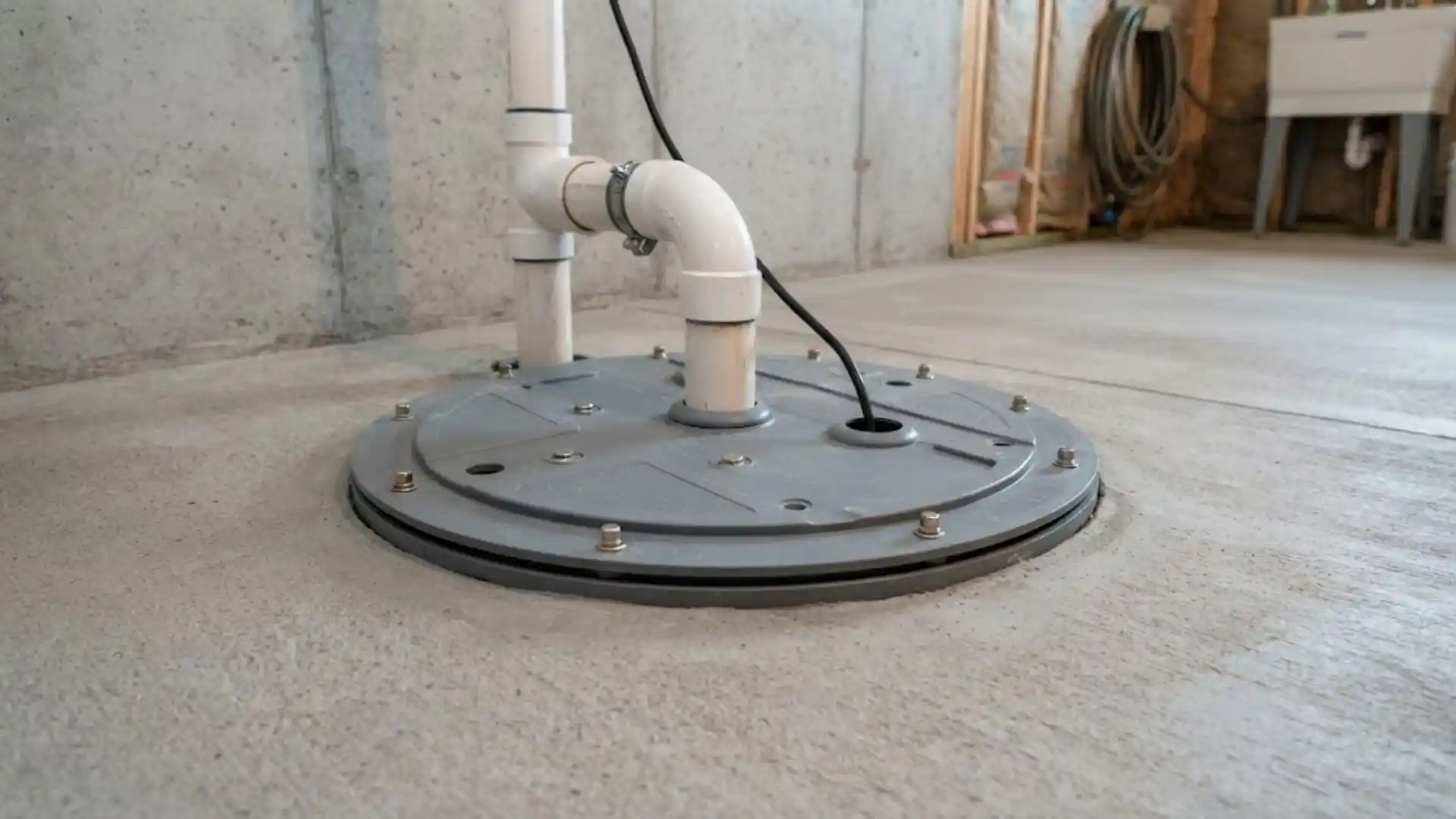
Three things tend to fail during a heavy snowmelt season, usually in this order. First, window wells: if the drain at the bottom of a window well is clogged with debris or was never properly connected to a drainage system, runoff collects right against the foundation and eventually finds a way through a window seal or a crack. Second, sump pumps: a pump that's worked fine for years can be overwhelmed by a genuinely wet spring, especially if it lacks a battery backup and the home loses power during a storm at the same time snowmelt peaks. Third, grading: if the ground around a home's foundation doesn't slope away from the house, or if gutters and downspouts dump water within a few feet of the foundation instead of carrying it further away, that water has a direct path toward the basement.
What Actually Helps, In Order Of Cost
Before spending money on anything structural, start with the cheapest fixes. Clear debris out of window wells and confirm their drains aren't blocked. Check that downspouts extend at least four to six feet from the foundation rather than dumping water right at the base of the house. If you have a sump pump, test it now, before spring, rather than discovering it's failed during the first heavy melt.
If those steps don't solve a recurring problem, a sump pump with a battery backup is usually the next reasonable investment, particularly for homes on lower-lying lots near a creek corridor. Battery backup matters specifically because Utah spring storms sometimes bring both heavy precipitation and power outages at the same time, which is exactly when a sump pump is needed most and least likely to be running on grid power alone.
For homes with a documented history of repeat flooding despite these fixes, exterior foundation drainage (a French drain system routed away from the house) addresses the underlying groundwater pressure rather than just reacting to symptoms. It's a bigger investment, but for a home that floods every single spring regardless of maintenance, it's often the fix that actually stops the pattern rather than managing it.
If It's Already Flooded
Once water is in the basement, speed matters more than anything else. Basement water removal needs to start as soon as possible, because Pleasant Grove's clay soil can keep pushing groundwater through a slab for days after the visible flooding stops, even once the initial water is pumped out. If the basement is finished, drywall and carpet that've absorbed water for more than a day or two often can't be fully dried and need to come out to prevent a mold problem from starting behind a wall that looks fine on the surface.
If you're dealing with recurring spring flooding in Lindon or elsewhere in northern Utah County, the same clay-soil and creek-drainage pattern applies, and the same seasonal maintenance steps are worth checking before the next runoff season arrives.
What A Typical Spring Season Looks Like For Us
Our dispatch volume for basement water calls in Pleasant Grove roughly triples between mid-March and early May compared to the rest of the year, tracking almost exactly with how fast the snowpack on Timpanogos is melting in a given week. A slow, gradual melt spread over six or eight weeks tends to produce a manageable trickle of calls, mostly minor window-well seepage. A fast melt compressed into two or three unusually warm weeks, especially if it overlaps with a rain event, produces a much sharper spike, with several calls sometimes coming in from the same general neighborhood within the same day or two.
This pattern is worth knowing if you're trying to decide when to do preventive maintenance. Checking window wells and testing a sump pump in early March, before the melt has really started, gives you a real window to fix a problem before it matters, rather than discovering a clogged drain or a dead pump during the exact week you needed it working.
What We Look For On A Repeat-Flooding Property
When a homeowner tells us their basement has flooded more than once during past spring seasons, we treat that call differently than a first-time flood. Instead of just extracting and drying, we spend extra time trying to identify the specific mechanism (grading, a specific window well, a particular section of foundation) since a property with a documented repeat pattern usually has a fixable root cause rather than simply being unlucky twice. Figuring out which window well or which section of yard is actually the source, rather than treating the whole property as equally at risk, is often what makes the difference between paying for extraction every spring indefinitely and finally solving the problem.
The Bottom Line
Spring basement flooding in Pleasant Grove isn't random. It's the predictable result of clay soil, foothill runoff, and infrastructure that sometimes wasn't built with today's development density in mind. A few hours of preventive maintenance each fall (clearing window wells, testing sump pumps, checking grading) catches most of what would otherwise become an emergency call in April or May.