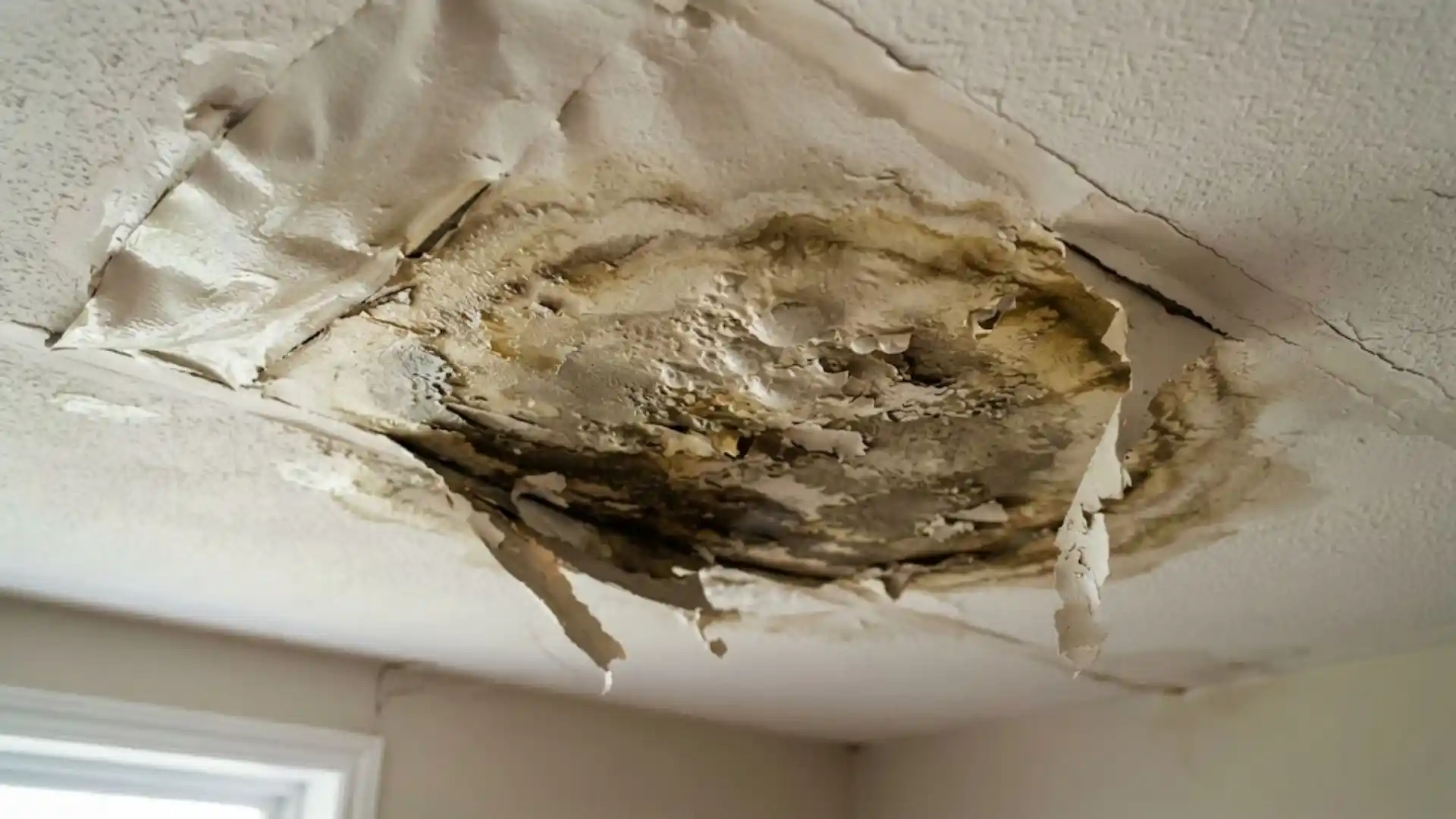
One of the most common calls to our dispatch line doesn't start with a flooded basement or an obvious burst pipe. It starts with a homeowner noticing a stain, or a soft, slightly sagging spot, on a ceiling below an upstairs bathroom, and not realizing that by the time it's visible, water has usually been leaking into that ceiling cavity for days or even weeks.
Why This Leak Stays Hidden So Long
A toilet with a worn wax ring, a shower pan with a failing seal, or a tub overflow drain with a loose gasket can leak slowly enough that no water ever appears on the bathroom floor itself. Instead, it drips into the space between the bathroom subfloor and the ceiling below, where it's absorbed by insulation and the back side of the drywall long before enough accumulates to show through as a visible stain. Water also doesn't always drip straight down. It often runs along a floor joist before finding its way through the ceiling at a point that isn't directly below the actual leak, which is part of why finding the true source sometimes takes more investigation than just looking straight up from the stain.
The Warning Signs Worth Checking For
A few signals are worth checking regularly if you have a bathroom directly above another room. A subtle yellow or brown discoloration on a ceiling, even if it isn't dramatic, deserves attention rather than a wait-and-see approach. A soft spot that gives slightly when pressed almost always means the drywall has absorbed enough water to weaken structurally, and it should be treated as urgent, a ceiling in this condition can fail with little further warning. A musty smell in a room with no visible staining at all can also indicate active moisture and, potentially, mold already developing inside the ceiling cavity out of sight.
Why This Often Becomes A Mold Problem, Not Just A Water Problem
Because these leaks are slow and hidden by nature, the water sitting in a ceiling cavity or wall often isn't caught within the 24 to 48 hour window that typically prevents mold from establishing. By the time a homeowner notices a stain and calls for an assessment, it's common to find that mold has already started in the insulation or the back side of the affected drywall, particularly in a finished basement ceiling below an upstairs bathroom, where airflow is limited and the moisture has nowhere to evaporate to.
What The Repair Actually Involves
Ceiling water damage repair starts with finding the actual leak source, which sometimes means checking the bathroom above for a failing wax ring, shower pan, or supply line connection rather than assuming the ceiling stain marks the exact spot. Once the leak is stopped, saturated drywall and insulation that can't be fully dried are removed, and if mold has already started, that gets addressed as part of the same job rather than as a separate visit. Because water damage and mold are so often connected in this specific scenario, we can quote a single job covering both the ceiling repair and any needed mold remediation together, rather than scheduling them as two unrelated projects.
What To Do If You Notice The Signs
If you see a soft spot, staining, or smell something musty below a bathroom, the most useful first step is checking the bathroom above for any sign of a leak around the toilet base, shower pan, or tub overflow, but don't delay a professional assessment while you investigate, since a soft ceiling can fail without much additional warning. This scenario plays out just as often in homes throughout Lehi and other nearby Utah County cities with similar two-story home layouts.
How To Narrow Down Which Fixture Is Leaking
If you've found a ceiling stain and want to investigate before calling anyone, a simple test can help narrow down the source. Run the shower or tub for several minutes while someone checks the ceiling below for any change, then separately flush the toilet a few times and check again. If the ceiling reacts more to the shower test, the leak likely traces to the shower pan or supply lines; if it's the toilet test, a worn wax ring or a loose supply connection at the base is more likely. This isn't a substitute for a professional assessment, but it can help you describe the problem more precisely when you do call, which speeds up diagnosis.
Why Waiting For The Weekend Rarely Works Out
A common instinct when noticing a ceiling stain on a Tuesday is to make a mental note to deal with it over the weekend, especially if nothing is actively dripping. The problem with this approach is that the leak causing the stain typically doesn't pause just because it's inconvenient to address right away, a slow leak continues at roughly the same rate whether you call immediately or in four days, and those extra days are exactly the window in which mold has the best chance of establishing itself before drying can even begin. If you're going to delay a call, at minimum avoid using the bathroom above more than necessary in the meantime to limit how much additional water reaches the affected area.
If you're a landlord managing a rental with a similar two-story layout, it's worth building a periodic check of upstairs bathroom fixtures into your regular maintenance routine, since tenants don't always notice or report a slow leak the way an attentive homeowner checking their own property would.
Acting on a hunch here costs little. A five-minute check of the bathroom above, followed by a call if anything looks off, is a reasonable habit to build whenever you notice something unusual on a ceiling below.
The Bottom Line
An upstairs bathroom leak rarely announces itself clearly. A subtle ceiling stain, a soft spot, or an unexplained musty smell below a bathroom is worth investigating promptly, since the delay between when this kind of leak starts and when it becomes visible is often exactly the window in which a water problem quietly becomes a mold problem too.