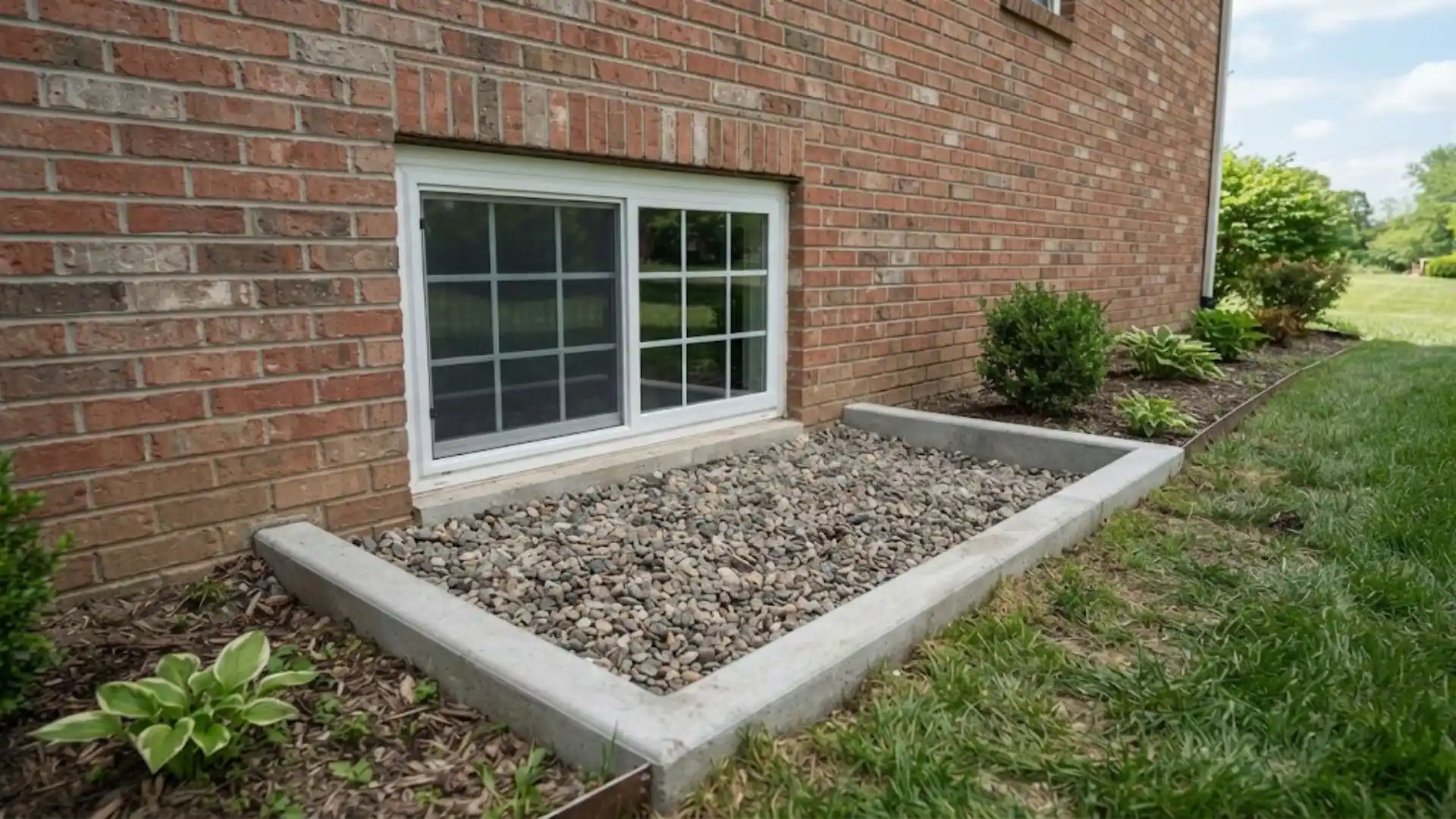
Of all the seasonal maintenance items a Pleasant Grove homeowner could check before spring, window wells rank among the most overlooked and the most consequential. A poorly draining or debris-clogged window well is one of the more common, entirely preventable causes of basement water damage we see, and unlike a plumbing failure, it's something almost any homeowner can inspect and fix themselves in under an hour.
How A Window Well Is Supposed To Work
A window well is designed with a drain at the bottom, typically connected to either the home's foundation drainage system or a dedicated dry well, that carries rainwater and snowmelt away from the basement window rather than letting it collect. When that drain is working properly, even a heavy downpour or a fast spring melt shouldn't put water anywhere near the window seal itself.
What Actually Goes Wrong
Over time, leaves, dirt, and general yard debris accumulate at the bottom of a window well and gradually clog the drain, sometimes so slowly that a homeowner doesn't notice until the well fills with water during the next significant storm. In some cases, especially in older Pleasant Grove homes, the drain was never properly connected to a functioning drainage system in the first place, meaning water in the well has nowhere to actually go regardless of how clear the surface looks. Either way, once a window well fills faster than it drains, water sits directly against the basement window, and most basement window seals simply weren't designed to hold back standing water indefinitely.
Why This Matters More In Pleasant Grove Specifically
Given the area's clay-heavy Lake Bonneville lakebed soil, ground around a foundation already drains slower than it would in sandier soil found elsewhere. A window well that's merely slow to drain in a different climate can become one that essentially doesn't drain at all in Pleasant Grove's soil conditions, particularly during spring snowmelt when the surrounding ground is already saturated and has nowhere to send additional water.
The Maintenance Check That Takes Ten Minutes
Before spring runoff season and again before the fall rains, clear any leaves and debris out of each window well down to the drain itself, and pour a bucket of water into the well to confirm it actually drains within a reasonable time rather than sitting. If water doesn't drain, or drains very slowly, the well's drain line may be clogged, disconnected, or was never properly installed, any of which is worth addressing before it becomes an active leak during the next storm rather than after.
Window Well Covers
A well-fitted window well cover reduces how much debris and precipitation reaches the well in the first place, which reduces both drainage strain and the amount of maintenance the well needs going forward. Covers aren't a substitute for a functioning drain, though, a covered well with a clogged drain can still allow water to seep in around the cover's edges during a genuinely heavy or prolonged event.
If Water Has Already Gotten In
If a window well has already overflowed into your basement, basement water removal should start as soon as possible, since water entering through a window well often carries in outdoor debris and sediment along with it, adding a cleanup step beyond simple extraction. We also check whether the window seal itself was compromised by the event, since repeated exposure can degrade a seal that was fine before the first overflow.
This same maintenance habit applies wherever window wells are common throughout Utah County, including Lindon and other nearby cities sharing Pleasant Grove's soil and climate pattern.
Signs Your Window Well Drain Isn't Working, Beyond Standing Water
Standing water after a storm is the most obvious sign of a window well drainage problem, but a few subtler signs are worth watching for too. A persistent damp or musty smell near a basement window even without visible flooding can indicate chronic low-level moisture from a slow-draining well. Efflorescence (a white, chalky mineral deposit) on the foundation wall near a window well suggests water has been seeping through that section of foundation repeatedly over time, even if you've never seen the well itself overflow. Small cracks in the foundation near a window well are also worth having assessed, since repeated water pressure against that section of wall over multiple seasons can gradually worsen an existing crack.
When A Window Well Needs More Than Basic Maintenance
If clearing debris and confirming drainage doesn't resolve a recurring window well problem, a few bigger fixes are worth considering. Extending or improving the drain line itself, particularly if it was ever connected to a system that's since become inadequate for the property's drainage needs, sometimes requires a plumber or drainage specialist rather than a DIY fix. In more severe cases, regrading the soil immediately around the window well to ensure water is directed away rather than pooling against the foundation addresses the problem at its source, though this is a bigger project than most homeowners tackle without professional help.
Adding This To Your Seasonal Routine
Pair your window well check with another task you already do twice a year, like changing HVAC filters or checking smoke detector batteries, so it becomes a habit rather than something easy to forget. A ten-minute check tied to an existing routine is far more likely to actually happen every season than a standalone task you have to remember on its own.
And if you're not confident checking this yourself, it's a quick, low-cost item to ask about during any other home maintenance visit, whether that's a gutter cleaning, a general home inspection, or a landscaping consultation, since it takes only a few extra minutes for someone already on-site.
If you've just moved into a Pleasant Grove home and aren't sure of its window well history, a quick check during your first few weeks is a reasonable way to get ahead of a problem before the next storm or melt season tests it for you.
A functioning window well is a small, unglamorous piece of a home's overall drainage system, but it's one of the few components a homeowner can fully inspect and maintain without any special tools or training.
The Bottom Line
A ten-minute window well check twice a year prevents a meaningful share of the basement flooding calls we take. It's one of the few pieces of Pleasant Grove-specific water damage prevention that costs nothing beyond a few minutes of attention.